Professor WONG Wai Cheong writing a Poem of Yuan Jie (元結) in running script

7


千里楓林煙雨深,無朝無暮有猿吟。
停橈靜聽曲中意,好是雲山韶濩音。

Giān lǐ fēng lín yān yǔ shēn , Wú zhāo wú mù yǒu yuán yín.
Tíng ráo jìng tīng qū zhōng yì , Hǎo shì yún shān sháo huò yīn.

: 船 boat

好是:真是。是舜樂,是湯樂。元結有《補樂歌》十首,其八小序說:“大,有虞氏之樂歌也。” 又其十小序說:“大,有殷氏之樂歌也。” 全句的意思是,這曲子真是雲山之中的韶、濩似的樂曲。

Seals : Wong (Huang) 黃 (朱紋), Xīn Yuán zhǎng nián 欣園長秊(年) (朱紋)


This is the third of the series of five Āi nǎi (欸乃) poems. They were written in 767CE.

Āi nǎi (欸乃) was some folk songs sang by boatmen / fishermen in the water among Húnán (湖南), Guǎng Xī (廣西) and Guì Zhōu (貴州).

欸乃:拔船的聲音。一說是湖南、廣西以及貴州三省交界廣大地方山歌末尾時用高亢嗓音喊唱出來的一聲號子。元結自註:“欸乃:棹舡之聲。” 欸乃曲:即“山歌”或“船歌”的別稱。


The poet was on his boat journey sailing upstream from Zhǎng Shā (長沙) back to Dào Zhōu (道州). The maple forests by the side of the river are picturesque. In addition to the sounds of monkeys in the mornings and evenings, the singing of the boatmen echoed among the poetic scene. However, the water in the river was rapid and the journey was rough. The 5 poems were impromptu work to encourage the boatman to persevere with their heavy work.


Yuan Jie (元結) (719-772), also known as Cì Shān (次山), Màn Láng (漫郎) and Ao Sǒu (聱叟) was a famous poet in the Tang Dynasty. He was a native of Henan (河南). Yuan passed his imperial Chin-shih examination (登進士第) in 753 and was granted some posts in the government. He fought against Shǐ Sīmíng rebels (史思明叛軍) and was promoted to the post of Governor of Dào zhōu (道州刺史). Yuan has many merits. His poems reflect the harsh lives of the people and the evil and corruption of the government. He spoke out for the people. His poems of sceneries (山水詩作) were fresh and innovative. Unfortunately many of his writings have been lost. Scholars in the Ming Dynasty collated his works into Yuán Cì-shān Jí (元次山集).


Professor WONG Wai Cheong (黃維琩教授) (1902 – 1993), zi (字) Xīn Yuán (欣園), hao (號) Zǐ Shí (子實) was a well-known Chinese literature scholar and Calligrapher. Coming from a highly educated family, Mr Wong graduated from Guangzhou Zhongshan University (中山大學) with degrees. He was both a lawyer and a certified accountant and he held senior positions in the Guangzhou government. Mr Wong migrated to Hong Kong around the 1950s and taught at various secondary and tertiary education institutions. His contributions to Chinese education were significant. He had publications of his own poems and lecture notes.


The format of this long and narrow scroll is known as qín tiáo (琴條) or tiáo fú (條幅). The shape looks like a gǔ qin (古琴) hung vertically on a wall.


Further readings :

http://baike.baidu.com/view/9250825.htm?fromtitle=%E6%AC%B5%E4%B9%83%E6%9B%B2&fromid=10813733&type=syn

http://sou-yun.com/PoemBookNav.aspx?b=tshp&d=13&page=2&lang=t

黄維琩教授書法選輯 (1994) 鑑古書學社
y


Happy Mother’s Day


IMG_3261

游子吟  Yóu Zǐ Yín (Poem of a Wanderer) by Mèng Jiāo (孟郊) (751—814)


慈母手中線, 遊子身上衣。

Cí mǔ shǒu zhōng xiàn, yóu zǐ shēn shang yī.

My loving mother stretches a needle and thread in her hand.

She is making clothes for her departing son.


臨行密密縫,意恐遲遲歸

Lín xíng mì mi fèng, yì kǒng chí chí guī.

Stitch by stitch, she sews them very tightly,

Fearing that her son will not be back for a long time.


誰言寸草心,報得三春暉。

Shuí yán cùn cǎo xīn, bào dé sān chūn huī.

How could the grateful humble inch-tall grass

Ever repay the nurturing Spring Sun.


Mèng Jiāo (孟郊)(751—814) also known as Mèng Dōng Yě (孟東野) was a scholar and a poet. He was a native of Hú Hōu (湖州) (now Zhè Jiāng 浙江). Mèng suffered from lots of hardship and he did not succeed in his imperial Chin-shih examination (登進士第) until the late age of 46 and been a small official.

Little young grass grows toward the warm spring sunlight. Mother’s love is like the Spring Sun, warm and comfortable but not violently hot. Nothing can repay the love of our mothers. The 42 words poem does not contain the word ‘tears’ but it is deeply moving. It conveys strong emotions.


Further readings :

http://www.baike.com/wiki/%E6%85%88%E6%AF%8D%E6%89%8B%E4%B8%AD%E7%BA%BF (慈母手中线)

http://en.wikipedia.org/wiki/Meng_Jiao

Happy Mother’s Day

IMG_0308 (876x1280)


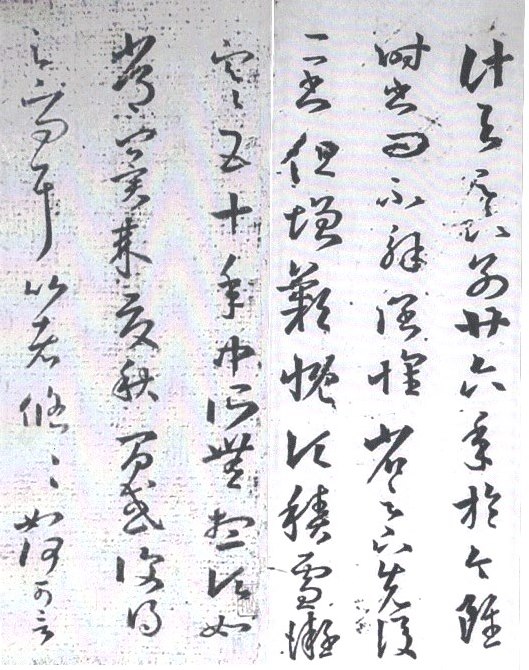
Jī Xuě Níng Hán Tie 積雪凝寒帖 and Kuài xuě shí qíng tiē 快雪時晴帖 by Wang Xizhi (王羲之)

Jī Xuě Níng Hán Tie 積雪凝寒帖 (Cao Shu 草書)(cursive script)

計與足下別,廿六年於今,雖時書問,不解闊懷。省足下先後二書,但增歎慨。頃積雪凝寒,五十年中所無。想頃如常,冀來夏秋間,或復得足下問耳!比者悠悠,如何可言?

A5

The images of ink rubbings have been photographical modified, with black and white reversed so that the characters are black on a white background.

tie
Jī Xuě Níng Hán Tie 積雪凝寒帖

計與足下別廿六年, 於今雖時書問, 不解闊懷。

Counting back I have not seen you for 26 years. While we write to each other from time to time, I still miss you very much.

省足下先後二書, 但增嘆慨。

After reading your two recent letters, I feel even more sorrowful (in not being able to see you).

頃積雪凝寒,五十年中所無。

Snow has thickly accumulated. (There had been heavy snowfall.) The weather is extremely cold. It has not been that cold for the last 50 years.

想頃如常, 冀來夏秋間, 或復得足下問耳。

I hope you are keeping well. I expect to hear from you sometime next Summer and Autumn.

 比者悠悠 ,如何可言。

Time flows on steadily. I do not know what to say about my gloomy feelings.

For further information on Shi Qi Tie, please visit the following webpage.

Cursive script: Shi Qi Tie (The Seventeenth) of Wang Xizhi 王羲之十七帖 (Part 1)


Kuài xuě shí qíng tiē 快雪時晴帖 (Xing Shū 行書)(semi-cursive script or running script)

Even these 3 words are not linked together, they echo with one another as a piece.
Kuài xuě shí qíng tiē 快雪時晴帖

The text:   羲之頓首快雪時晴佳想安善未果為結力不次王羲之頓首山陰張侯

頓首 mean bowing one’s head and is a courteous sign-off of letters. 羲之頓首 means Xizhi bows.  山陰張侯 Zhāng hóu of Shānyīn is the recipient of this letter.

快雪時晴佳。

The snow has fallen for a short time and it is sunny now. ( 剛才下了一陣雪,現在天又轉晴了。)

想安善。

I trust you are keeping well. (想必你那裡一切都好吧!)

未果為結。

I have not finished writing the letter to fully express my thoughts. (沒能照心意把信寫完,表達難以得體。)

力不次。

I felt helpless and inadequate. (心有餘而力不足。) OR  I felt weak. I could not express myself probably. I had to stop writing. (體力不繼,表達難以得體,就此停筆。)

At the very end of the manuscript, there is a very small inscription of two characters ‘Jūn qiàn’ (君倩).

The calligraphy of Wang Xizhi was fresh, elegant and innovative.

Please see two more detailed webpages on these two masterpieces by Wang Xizhi.

https://patricksiu.wordpress.com/kuai-xue-shi-qing-tie-%e5%bf%ab%e9%9b%aa%e6%99%82%e6%99%b4%e5%b8%96/

https://patricksiu.wordpress.com/ji-xue-ning-han-tie-%e7%a9%8d%e9%9b%aa%e5%87%9d%e5%af%92%e5%b8%96-by-wang-xizhi-%e7%8e%8b%e7%be%b2%e4%b9%8b-cao-shu-%e8%8d%89%e6%9b%b8/

Bibliography and further readings :

蔣勳 (2010) 手帖 南朝嵗月,  INK 印刻文學生活雜誌出版有限公司 ISBN 978-986-6377-94-5

Ouyang Z and Wen C.F. (2008) Chinese Calligraphy, Yale University Press, ISBN 978-0-300-12107-0

Two poems related to Qingming Festival

唐 杜牧 (Du Mu) (803 – 852)

清明時節雨紛紛, 路上行人欲斷魂。借問酒家何處有, 牧童遙指杏花村.

A drizzling rain falls on Qingming Festival. On their way, people’s hearts are breaking . Inquiring, where a tavern can be found? A cowherd points to the Apricot Flower Village at a distance.

(In the second sentence, the words ‘欲斷魂’ are so strong in emotion that some people interrupt this sentence as ‘People are on their way to a distant place and cannot go to sweep the tombs in their home village on the Qingming Day. This is why their hearts are breaking.’) 

Qingming 4


The character ‘眀’ should be ‘明’. Surprisingly calligraphers in the old days put extra strokes in some words. I just follow this special tradition.


宋  王禹偁 (Wáng Yǔ-chēng) (954 – 1001)

無花無酒過清明,興味蕭然似野僧。昨日鄰家乞新火,曉窗分與讀書燈。

Qingming 2

Passing the Qingming Festival without wine and flower is as lonely and dry as a monk in the wilderness.

Yesterday I asked my neighbour for a new fire (after the Hanshi Festival when all fire was extinguished); early this morning, I use the fire to light a lamp for my studies.

(Some people interpreted the second last sentence in a literal sense as ‘my neighbour begged me for a new fire’. As the word ‘乞’ means ‘to beg’, it is used to describe the poet’s own action of borrowing from the neighbour in a submissive manner, not the other way round. When referring to other people’s actions, the Chinese will definitely use a more polite and respectful term.)

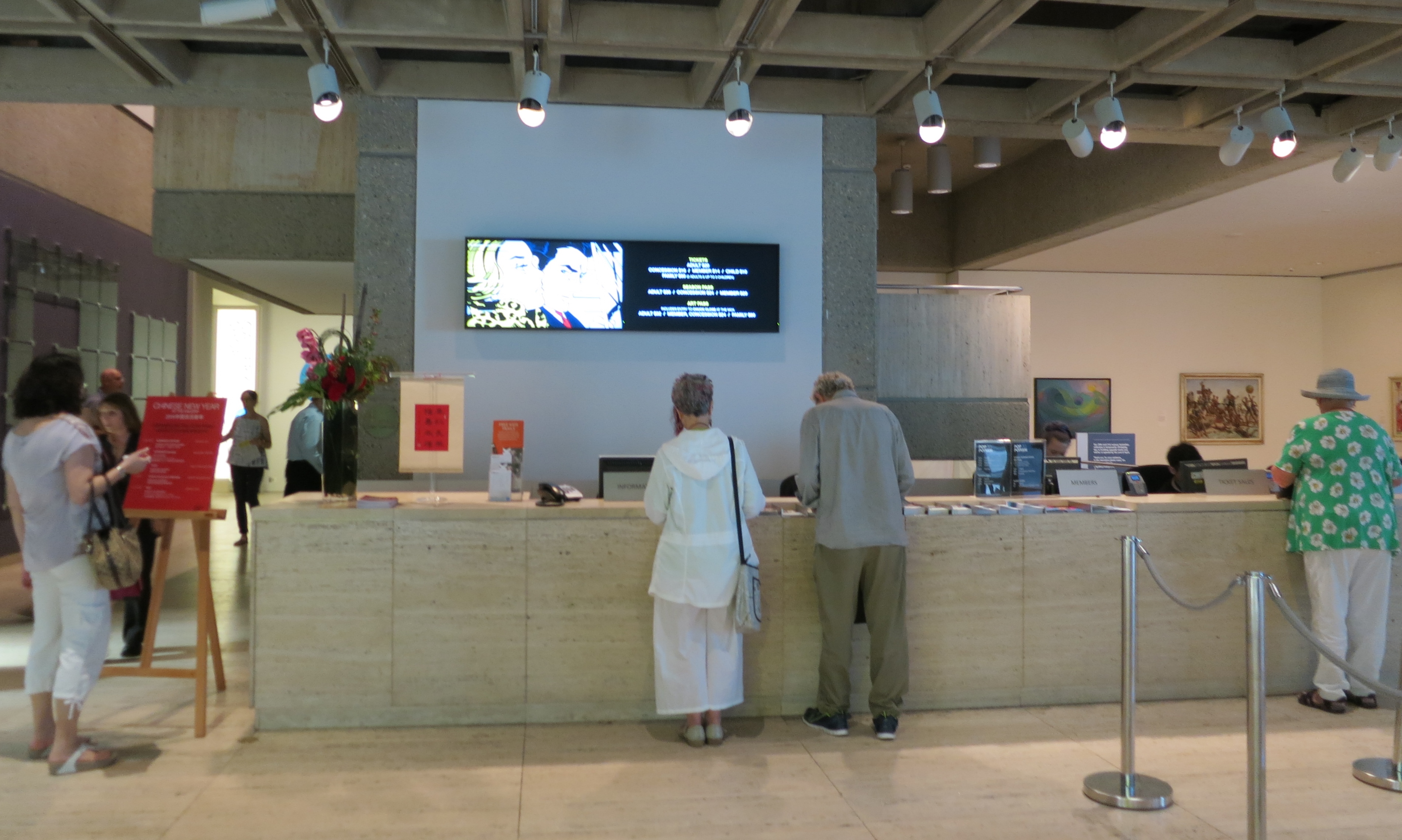
Couplet displayed in the foyer of Art Gallery NSW

Foyer of Art Gallery NSW during 2015 CNY


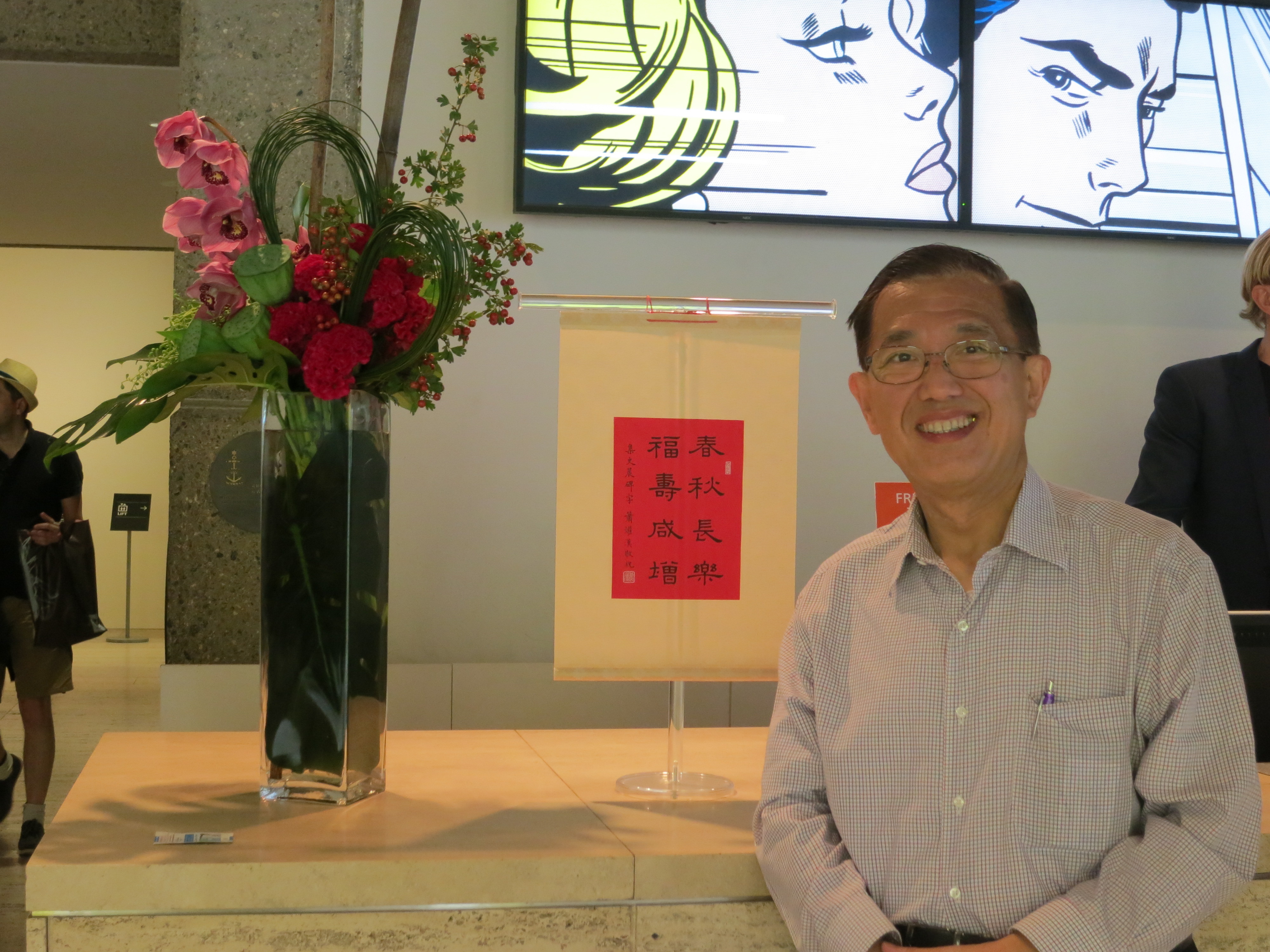
Patrick and the couplet
Patrick and his couplet


春秋長樂, 福壽咸增。(隸書) 印章 : 延年 (朱文長方印),  蕭燿漢 (白紋方印)
春秋長樂, 福壽咸增。(隸書)
印章 : 延年 (朱文長方印), 蕭燿漢 (白紋方印)


Forever joy throughout spring and autumn

Perpetual increments of blessing and longevity


Annual cleanup on 28th day of the final month in the lunar calendar 年廿八, 洗邋遢

The 28th day of the final month in the lunar calendar is a very special day. It is the tradition of Hong Kong, Macau and places in southern Guangdong to have an annual clean-up. In 2026, it falls on 15th February (Sunday).

This annual clean-up was illustrated and recorded in the nianhua (年畫) of the 19th Century.

28th Day (2).jpg

Renewing the Peachwood Board (桃符換彩)

28th Day.jpeg

The woman is cleaning some ornamental pieces.The woman is cleaning some ornamental pieces.

The Peachwood Board Change Colour (桃符換彩) (3)
After the annual clean up finishes, the red sticker (揮春) is pasted onto the wall.

The two scripts Hóng xǐ (鴻禧) means Happy New Year.

Couplets for Chinese New Year 春貼 (春聯, 揮春)

時和世泰, 人壽年豐。 (左 : 楷書,  ‧右: 隸書)
時和世泰, 人壽年豐。
(左 : 楷書, ‧右: 隸書)


Spring couplets (春聯 ) are usually seen on the sides of doors leading to people’s homes or as hanging scrolls in an interior. They used as a New Year’s decoration that expresses happy and hopeful thoughts for the coming year. They are usually written on red paper, the colour of happiness.

Originating from around 600 CE and flourishing during the last thousand year, spring couplets remain an enduring aspect of Chinese culture.  Please see more examples on my new page on couplets for Chinese New Year.

Single words :

福 (行書)
福 (行書)


Good Fortune
Good Fortune


The Good Shepherd 天生良牧


天生良牧
天生良牧

To celebrate my 60th Birthday, I worked with an old piece of my Calligraphy teacher, Mr WONG Wai Cheong 黃維琩老師. This piece of Calligraphy is about Jesus Christ – our Redeemer and our good shepherd.   I am a practising Catholic but I also study Buddhist sutras respectfully.  Buddhist literature is immensely important to Chinese literature and philosophy. The Diamond Sutra (金剛經) emphasizes the practice of non-abiding and non-attachment. It is not about the worship of idols for materialistic things.  I admire great Calligraphy work especially the gigantic writings on mountain cliffs. A lot of those writings were about Buddhist literature.  People at that time were very courageous and had very strong faith and great dedications. They were also highly gifted and artistic. People today still learn from old masterpieces engraved on rocks.

The text is as follows:

天生良牧  步武基督  我主是宗  天恩共沐  傳道東來  華人悅服  開我心門  拯我靈肉

病者以瘳  飢者以畜  教謹序庠  賛參化育  愛德流行  羣獲天福  臺上之鐙  人前之燭

More information about Mr Wong can be seen at my website page called ‘Studies of the Calligraphy of Mr WONG Wai Cheong’.

山東東平洪頂山摩崖石刻習作二種

山東東平洪頂山摩崖石刻習作二種

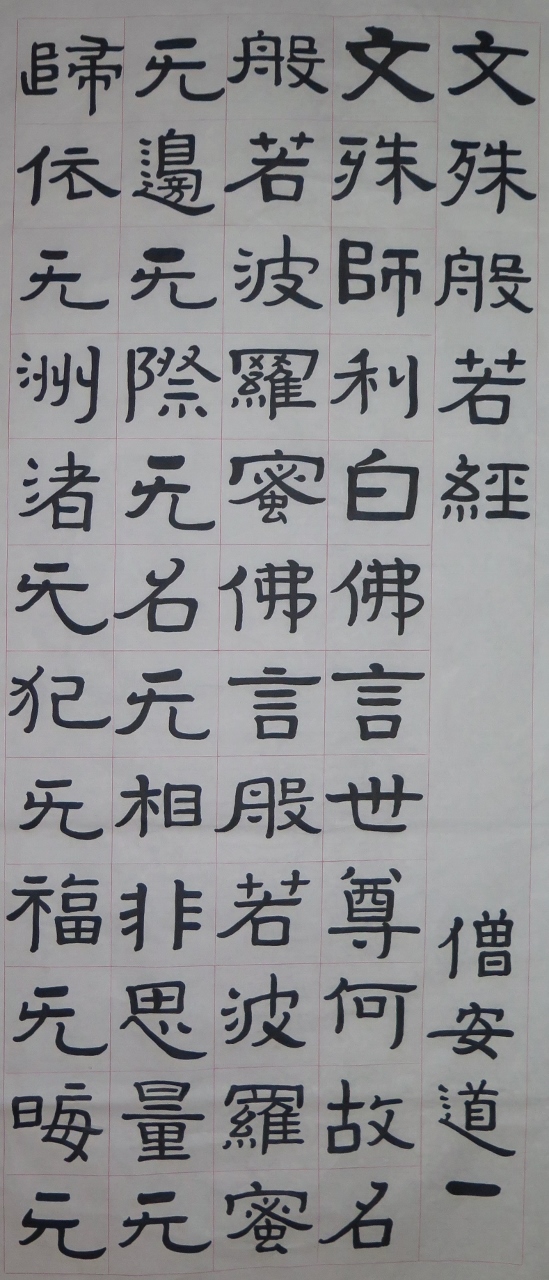
(1) 《文殊般若經》


文殊般若經 (2)
文殊般若經 (2)  紙本掛軸 136 x 68 cm     2015 臨摹
文殊般若經 (1)
文殊般若經 (1)  紙本掛軸 136 x 68 cm     2015 臨摹


釋文 : 文殊師利白佛言,世尊何故名般若波羅蜜?佛言:般若波羅蜜,無邊無際,無名無相,無思量,無歸依,無洲渚,無犯無福,無晦無明。如法界無有分齊,亦無限數,是名般若波羅蜜。亦名菩薩訶薩行處,非行非不行處,惡入一乘名非行處,何以故無念無作故

山東地區在南北朝時是中國北方地區的佛教中心之一, 至今仍存有大量的佛教遺跡, 其中以佛教造像和摩崖刻經最為著名。在有確切紀年的摩崖刻經中, 又以東平洪頂山茅峪刻經為最早。

洪頂山摩崖石刻 是1994年新發現的,此後,許多報刊進行了報導,引起國內外專家學者的關注,國際影響漸大。

 《文殊般若經》是洪頂山摩崖石刻其中一種。全文共98字。石刻保存得極好。是僧安道一巨作之一。經文出自梁曼陀羅仙和僧伽婆羅譯本。文中以佛主如來與文殊菩薩對話的形式,禪釋出僧眾如何修成大智能到彼岸的“性空”思想,在佛經中具有代表性。

 書法特色 : 書寫風格是隸中帶楷,楷中帶隸,這是中國文字進化從隸到楷的重要特徵,  筆劃方直,且隸味稍顯濃厚,有的表現出名顯的蠶頭燕尾之態,與漢碑《張遷碑》字體接近字口稍深,顯得剛勁有力,穩重大方,內在動感較強。

(2)  “大空王佛四字

大空王佛
大空王佛 水墨 紙本掛軸 136 x 68 cm 2015 臨摹


大空王佛”四字,刻在洪頂山摩崖峪北中心處總高11.30米,最寬處達4.10米,“佛”字,高 4.65米,筆劃寬達20多厘米, 最寬的筆劃為50多厘米。整個字用筆大起大落,端莊雄渾是目前已知的我國境內最大的北朝大字。且每字均帶有裝飾性筆劃,尤其“佛”字兩豎之首端呈雙手狀,通天拔地,氣勢磅礴,雄偉壯觀。

“大空王佛” 四字表明以 “大空為王”,尊之為 “佛”,以表達安道一對 “集若性空” 的崇拜,因禪宗當時多受當權者迫害,安道一以大書寫 “大空王佛” 四字,有糞土人王,蔑視權貴之意。

安道​​,  是一位大德高僧。他不但精通佛學,還善書法。尤其摩崖榜書 “大空王佛” 最具特色。當地村民傳說當年安道一是扛著掃帚來寫的,就斷定此處刻經是中國同時期刻經真正的 “大字鼻祖” 。他把自己的一生都獻給了他所崇拜的佛教事業,其影響在當時可見一斑。可惜卻史載無名,可謂歷史的遺憾。

資料來源 :

http://hk.plm.org.cn/gnews/201019/201019189441.html

http://baike.baidu.com/view/929149.htm

http://baike.baidu.com/view/1817834.htm