Papercutting showing a colourful horse among the flowers
The horse is the seventh of the 12-year cycle of animals in the Chinese zodiac.
The Year of the Horse (馬) is associated with the Earthly Branch (地支) symbol Wǔ (午).
The Lunar New Year Day of the Year of Bǐngwǔ (丙午年) falls on February 17, 2026 (Tuesday) and ends on February 5, 2027 (Friday), Chinese New Year’s Eve.
The Chinese lunar calendar is made up of ten Heavenly Stems (天干) and 12 Earthly Branches (地支) as follows:
天干 (Ten Heavenly Stems) :
甲乙丙丁戊己庚辛壬癸
地支 (Twelve Earthly Branches)
子丑寅卯辰巳午未申酉戌亥
十二生肖 (12-year cycle in the Chinese zodiac):
鼠牛虎兔龍蛇馬羊猴雞狗豬
rat ox tiger rabbit dragon snake horse goat monkey rooster dog pig
Years of the Horse include 2026, 2014, 2002, 1990, 1978, 1966, 1954, 1942 …
Chinese Zodiac years are based on the Chinese lunar calendar. Interested people born in January or February can check the date of the Chinese New Year to confirm their birth sign, for example at the following site:
The horse is known for its energetic and dynamic nature. It symbolizes speed, agility and perseverance. Horses are highly social and they have excellent memories for learning and bonding.
Horse Artifacts throughout centuries
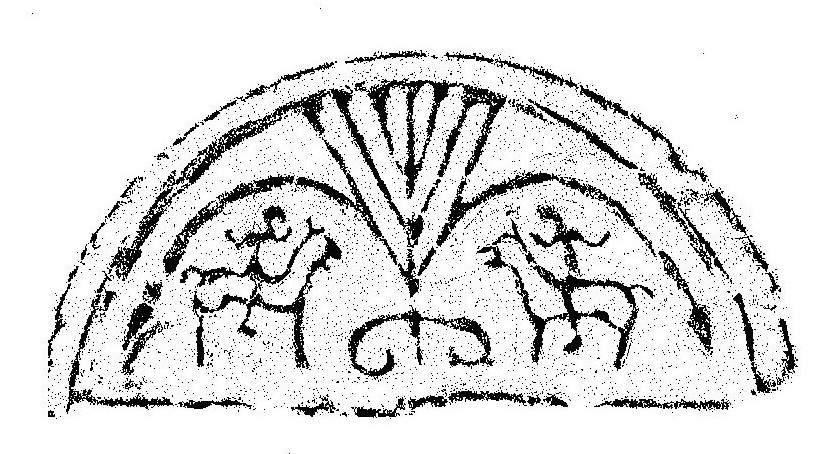
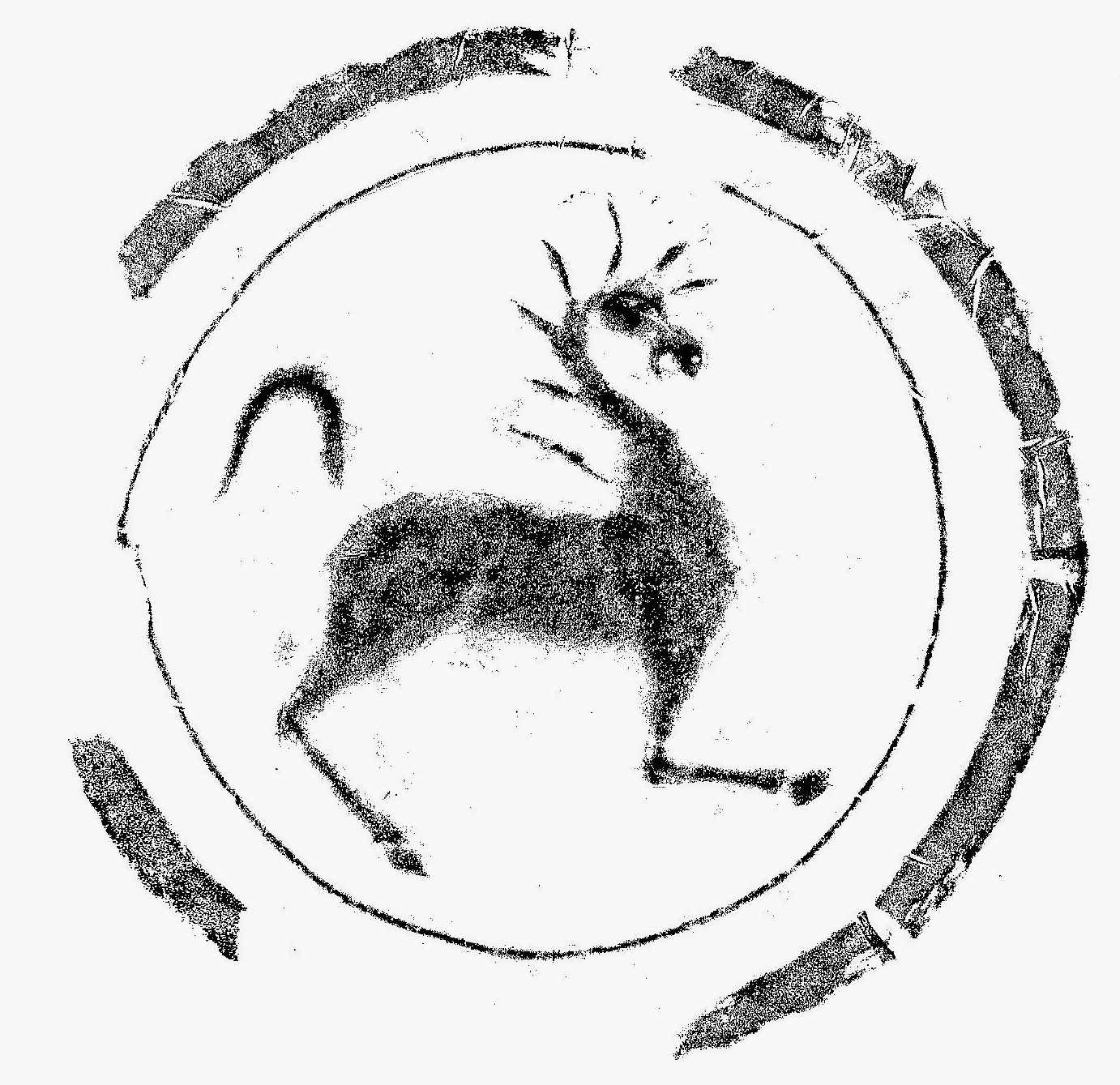
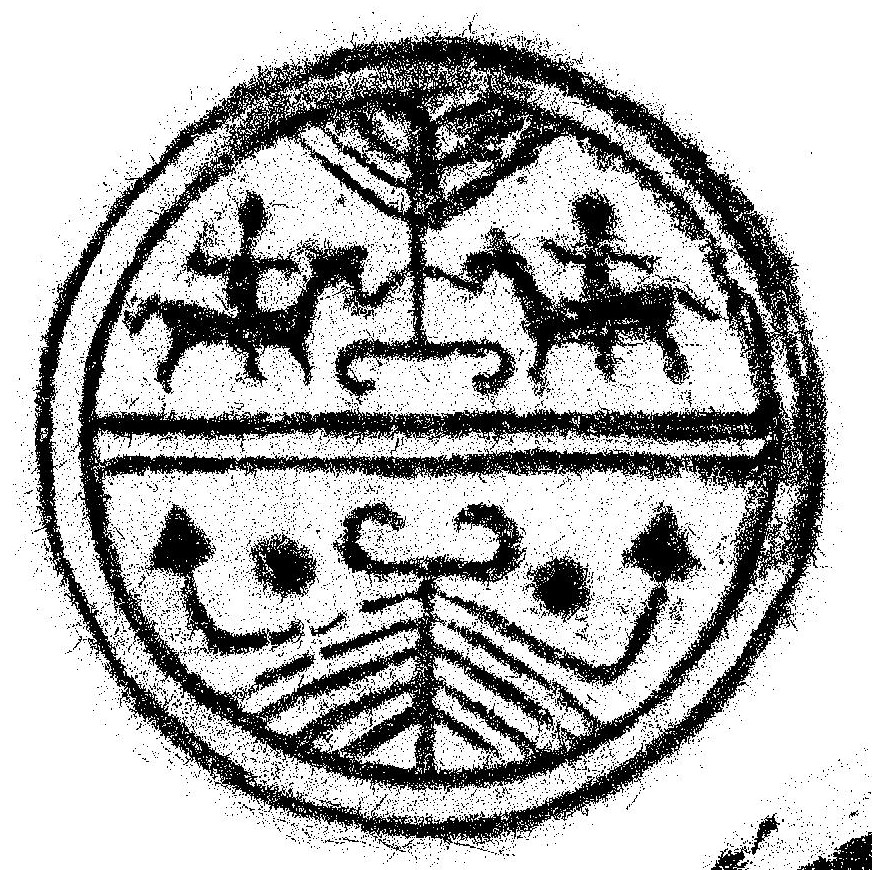
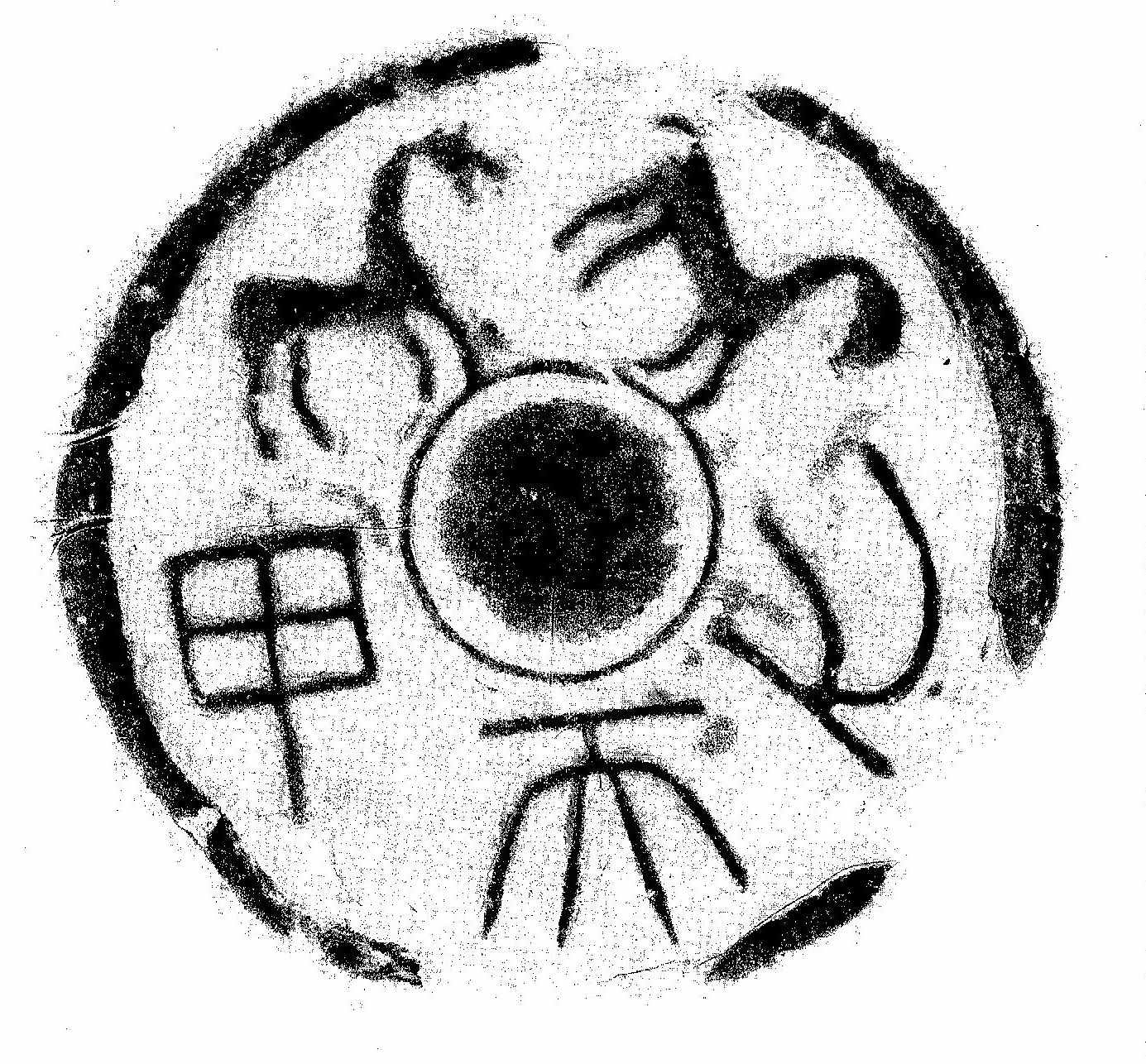
Roof-tile ends (瓦當)
Warring States (戰國時代) (467 BCE – 221 BCE), ink-rubbing of double-rider (雙騎) half-tile end, unearthed from the ruins of the ancient Qi city of Linzi (臨淄齊故城遺址), diameter 14 cm, height 6.7 cm
Qin Dynasty (秦朝)(221 – 206 BCE) ink-rubbing of horse-patterned roof-tile end (馬紋瓦當), diameter 18 cm, unearthed in Shaanxi Province (陕西省)Han Dynasty (漢朝)(202 BCE- 220 CE), ink-rubbing of roof-tile end with patterns of trees and two horses with riders (樹木双騎紋瓦當), unearthed from the ruins of the ancient Qi city of Linzi (臨淄齊故城遺址), diameter 13.3 cmHan Dynasty(漢朝)(202 BCE- 220 CE), ink-rubbing of a roof- tile end with characters ‘ Jiǎ tiān xià’ (甲天下), ‘Dominate the World’ , diameter 15.4 cm
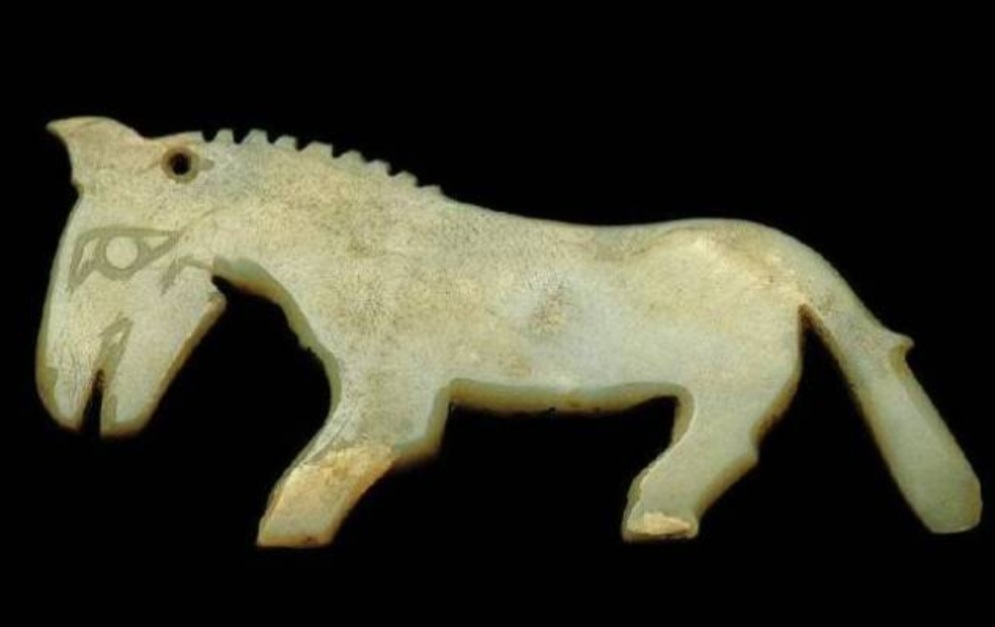
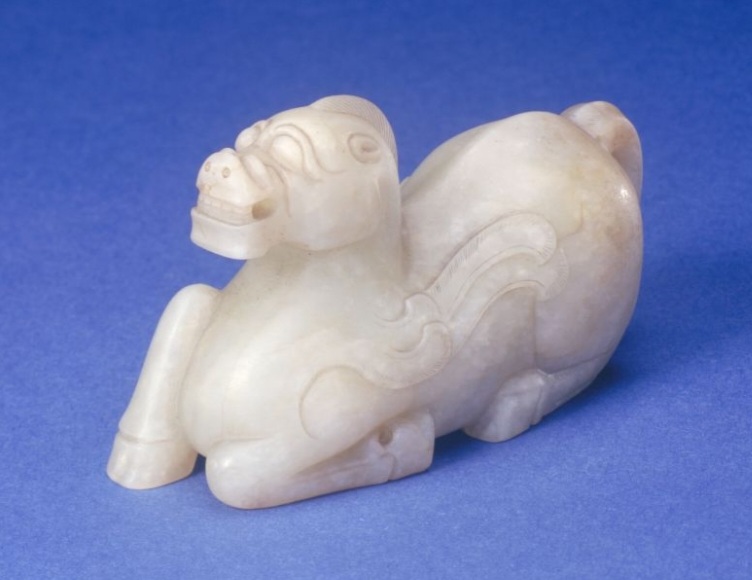
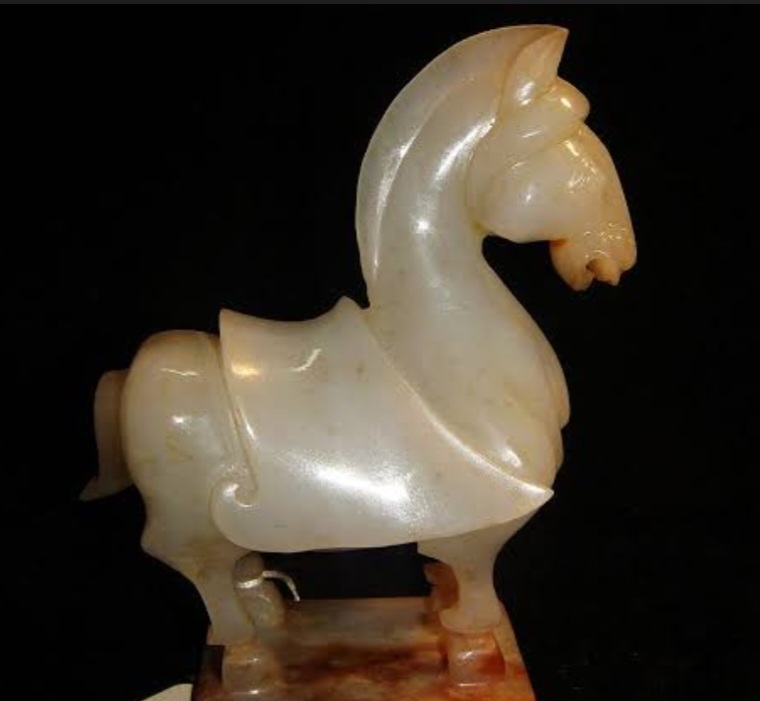
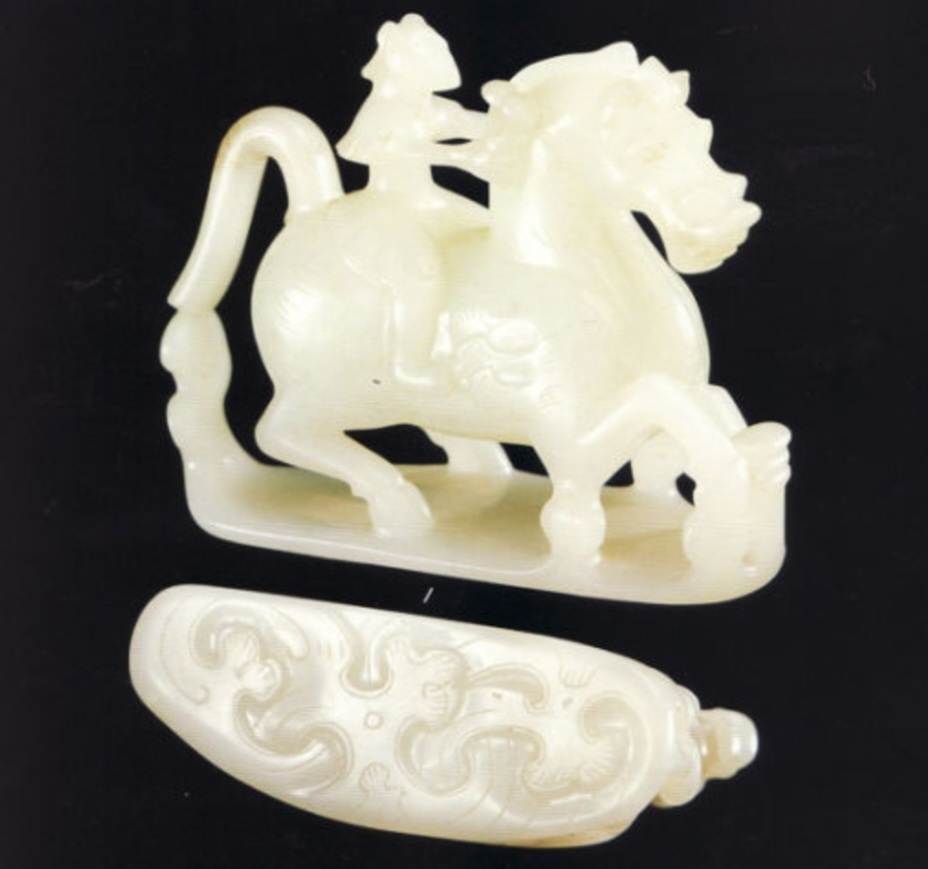
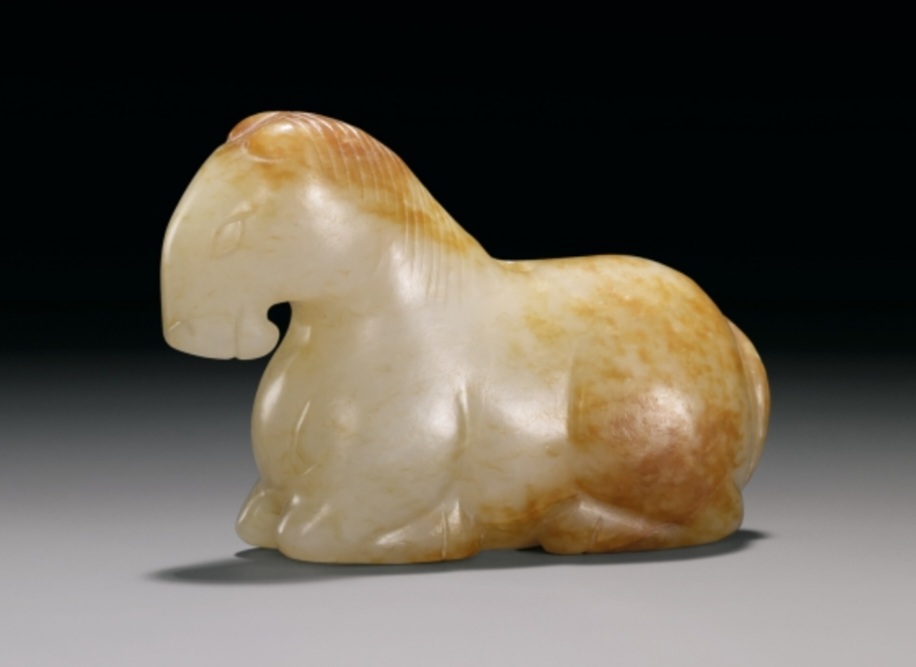
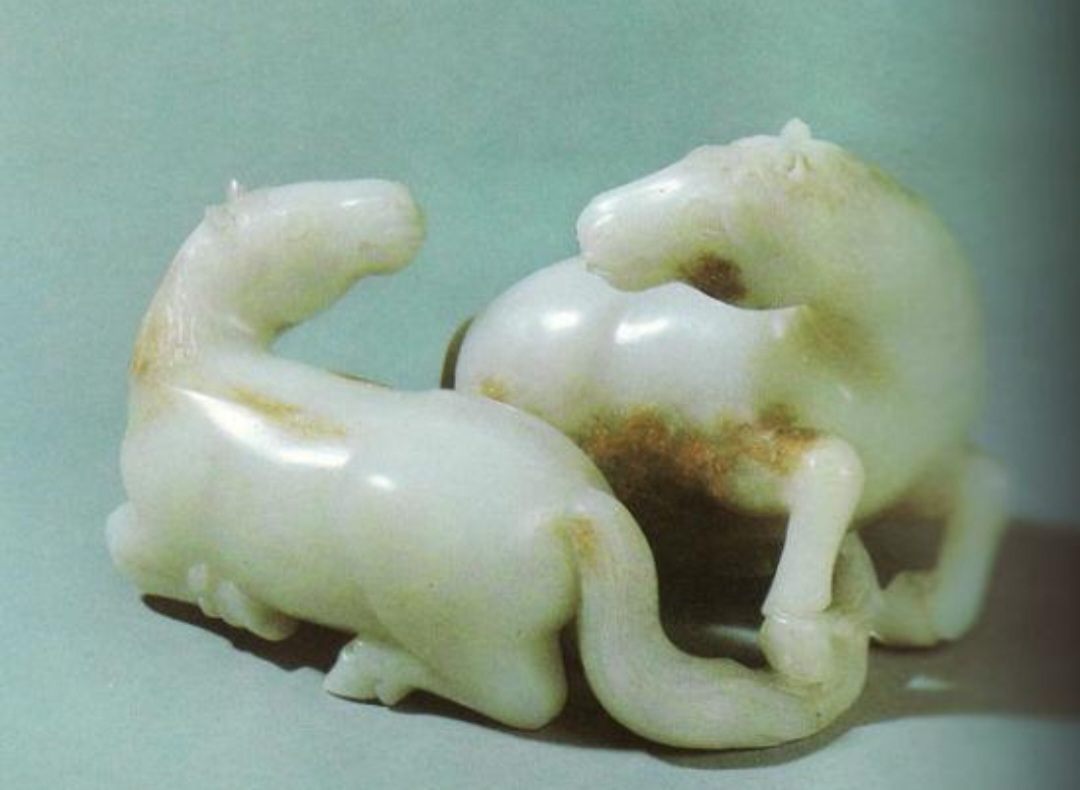
Jade ornaments
Shang dynasty (商朝)(16th – 11th centuries BC), a jade pendantQin Dynasty (秦朝)(221 – 206 BCE)Han Dynasty (漢朝)(202 BCE- 220 CE)Han Dynasty (漢朝)(202 BCE- 220 CE), a horse with a riderLiao Dynasty (遼代)(916 – 1125)Qing dynasty (清朝)(1644 – 1912)
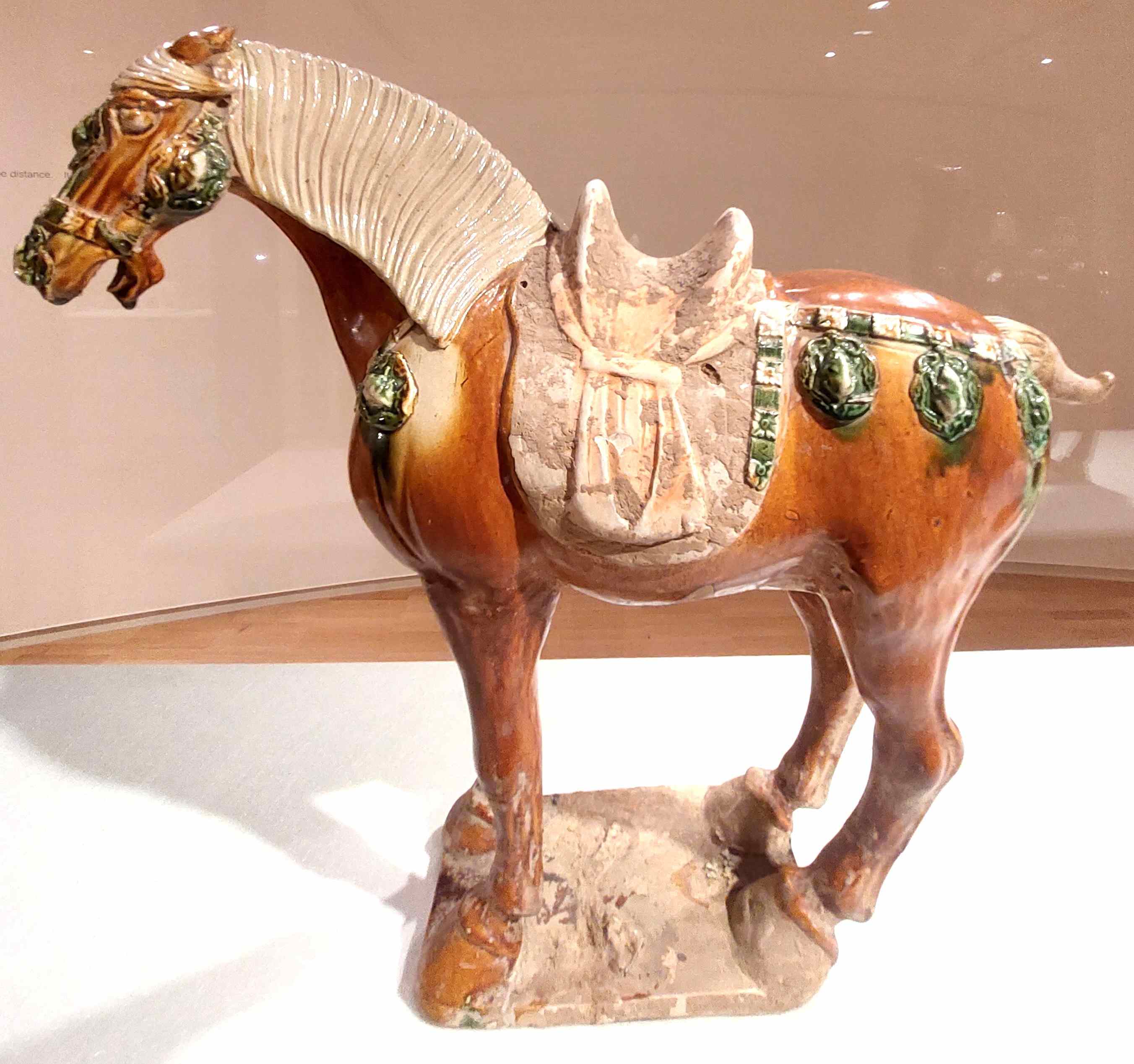
Tri-colour glazed ceramic (Tang Sancai ware 唐三彩)
Tang Dynasty (唐代)(618 – 907), Sancai ware (唐三彩), Horse, The National Gallery of Victoria
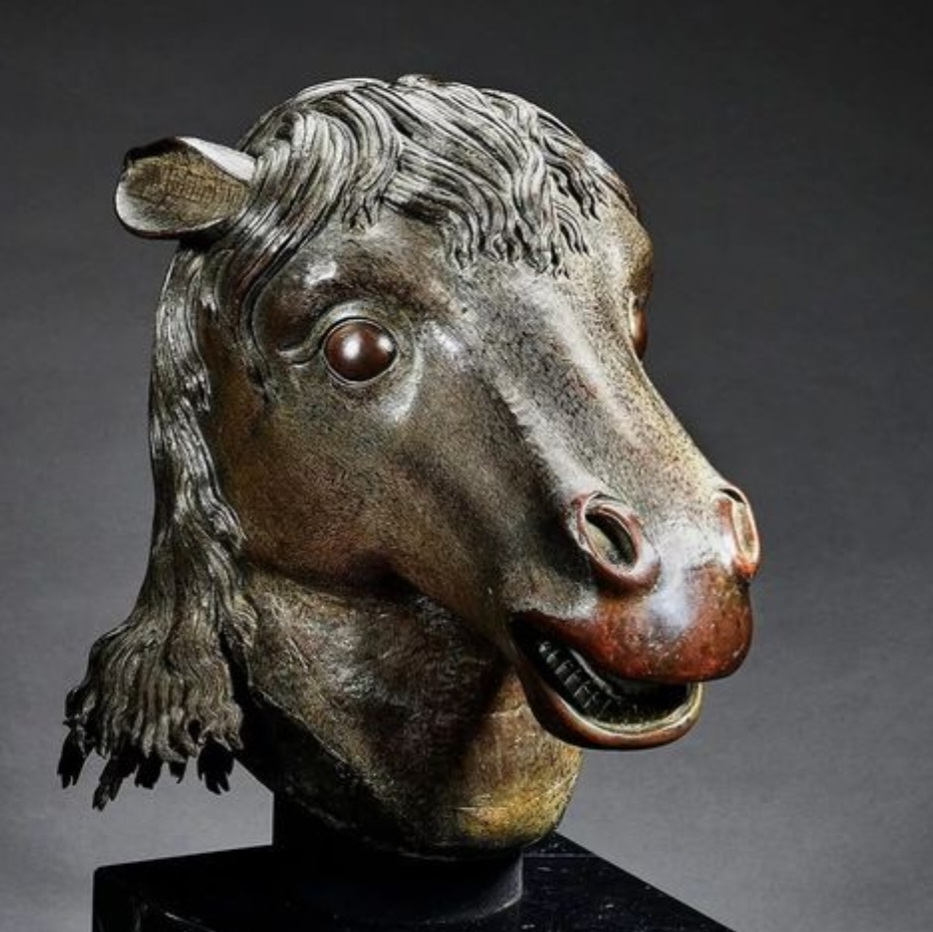
Bronze horse head
Twelve Old Summer Palace bronze heads
The Twelve Old Summer Palace bronze heads are a collection of bronze fountain heads in the shape of the Chinese zodiac animals that was part of a water clock fountain in front of the Haiyantang (海晏堂) building of the Old Summer Palace (圓明園) in Beijing. The statues would spout out water from their mouths to tell the time.
The bronze-cast heads of the stone statues were among the treasures looted during the destruction of the Old Summer Palace by British and French expeditionary forces (英法聯軍) in 1860 during the Second Opium War (1856-1860).
Summer Palace bronze horse head.
Frescoes
The frescoes from Li Xian (李賢), Prince Zhanghuai’s (章懷太子) tomb are important Tang Dynasty artworks linked to the son of Empress Wu Zetian (武則天). The tomb features over 50 murals depicting scenes of court life and activities like hunting and polo sport.
The horsemen carrying polo mallets were actively engaged in the game.
Relief sculpture (石刻)
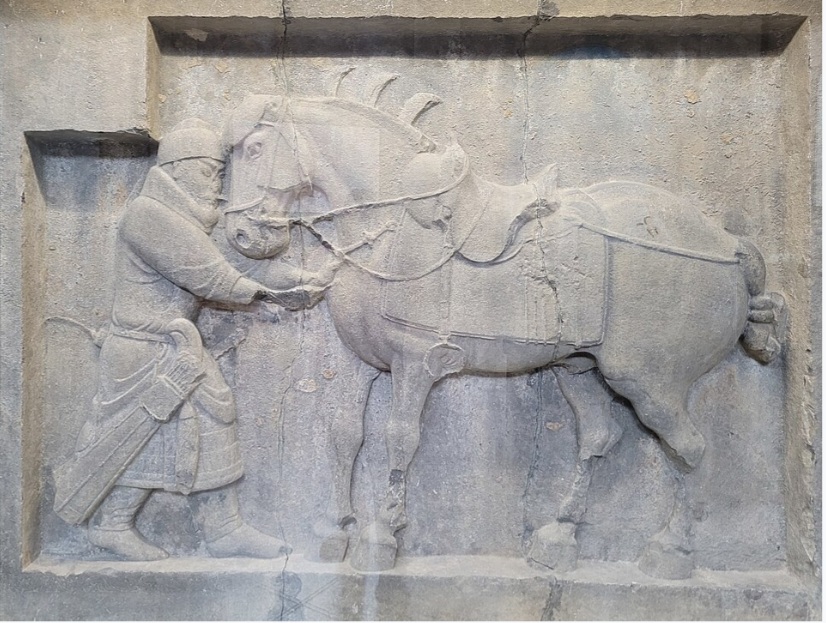
The Six Steeds of the Zhaoling Mausoleum (唐昭陵六駿石刻) are famous Tang Dynasty stone relief sculptures of Emperor Taizong’s (唐太宗) warhorses, created for his tomb (Zhaoling) in Shaanxi, China. These six reliefs depict his most significant warhorses.
One of Tang stone relief sculpture of Emperor Taizong’s (唐太宗) warhorses, 250 m x 300 cm each, commissioned around 636-649 CE. The horse named Saluzi (or Purple Gallop)(颯露紫), Penn Museum
Paintings
Han Gan (韓幹)(active ca 742 – 756) Night-shining White (照夜白圖卷), handscroll, ink on paper. 40.8 x 34 cm), The Metropolitan Museum of Art
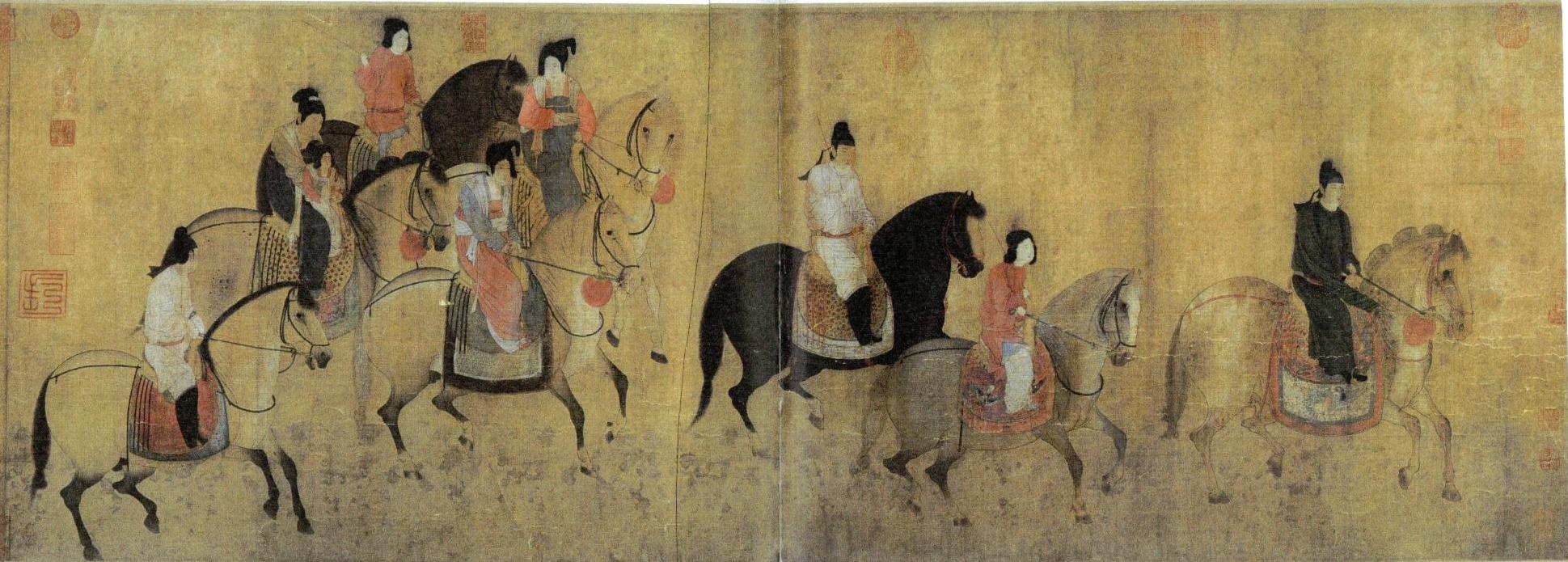
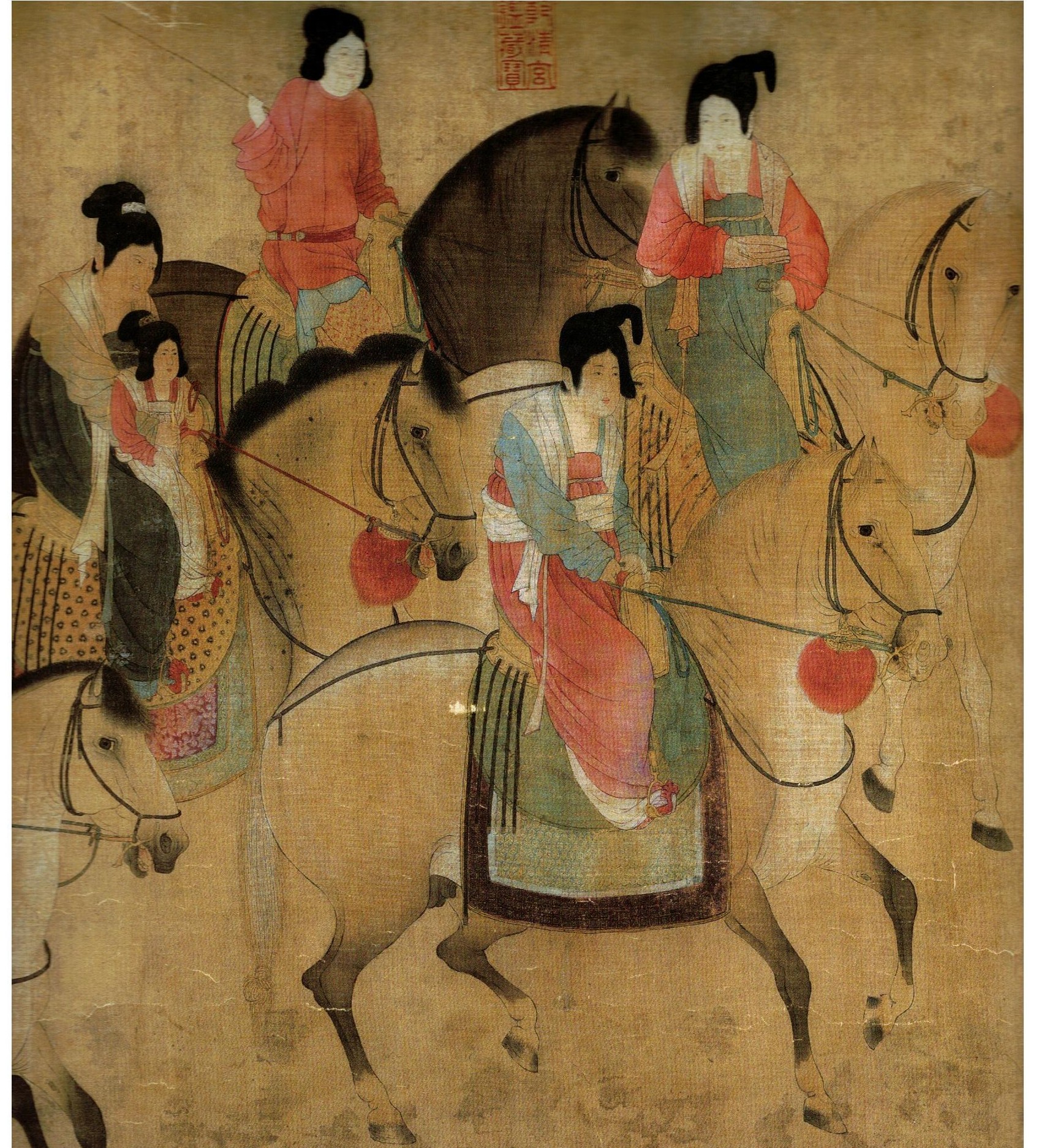
Zhang Xuan (張萱)(713-755) The Spring Outing of Lady Guo State (虢國夫人遊春圖), ink and watercolour on silk, 52 x 148 cm, Liaoning Provincial Museum (遼寧省博物館)details of the above painting
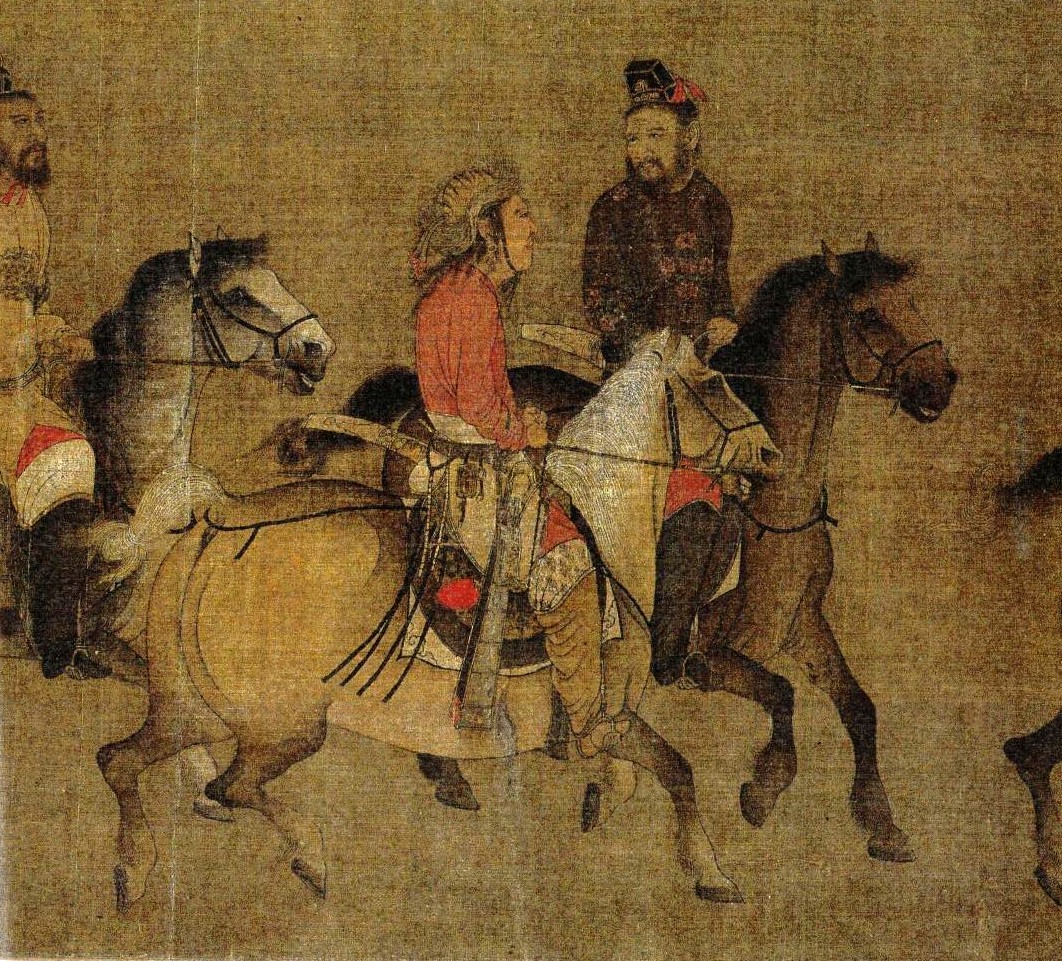
Li Zanhua (李贊華)(original name:Yelü Bei 耶律倍) (909 – 946) The King of Dongdan Goes Forth (東丹王出行圖), scroll, light colours on silk, 77.3 x 146.8, (only a portion is shown), National Palace Museum, Taipei (國立故宮博物院)
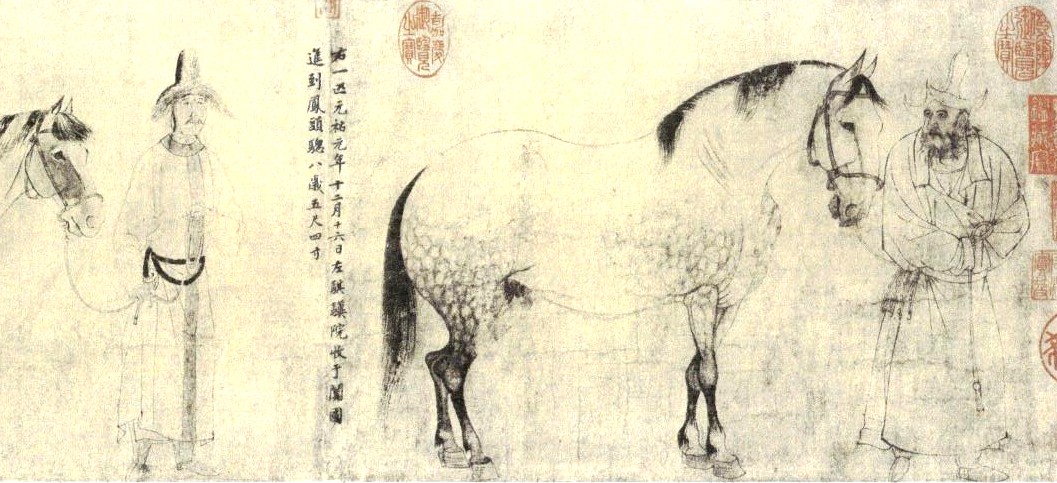
Li Gonglin (李公麟)(1049 – 1106), Five Horses (五馬圖), ink on paper, 29.3 x 225 cm, (only a portion is shown), personal collection in JapanSame as above, only a portion is shown.
Li Gonglin (李公麟)(1049 – 1106) After Wei Yan’s Pasturing horses (臨韋偃牧放圖), ink and watercolour on silk, 46.2 x 429.8 cm, (only a portion is shown), Palace Museum (故宫博物院)
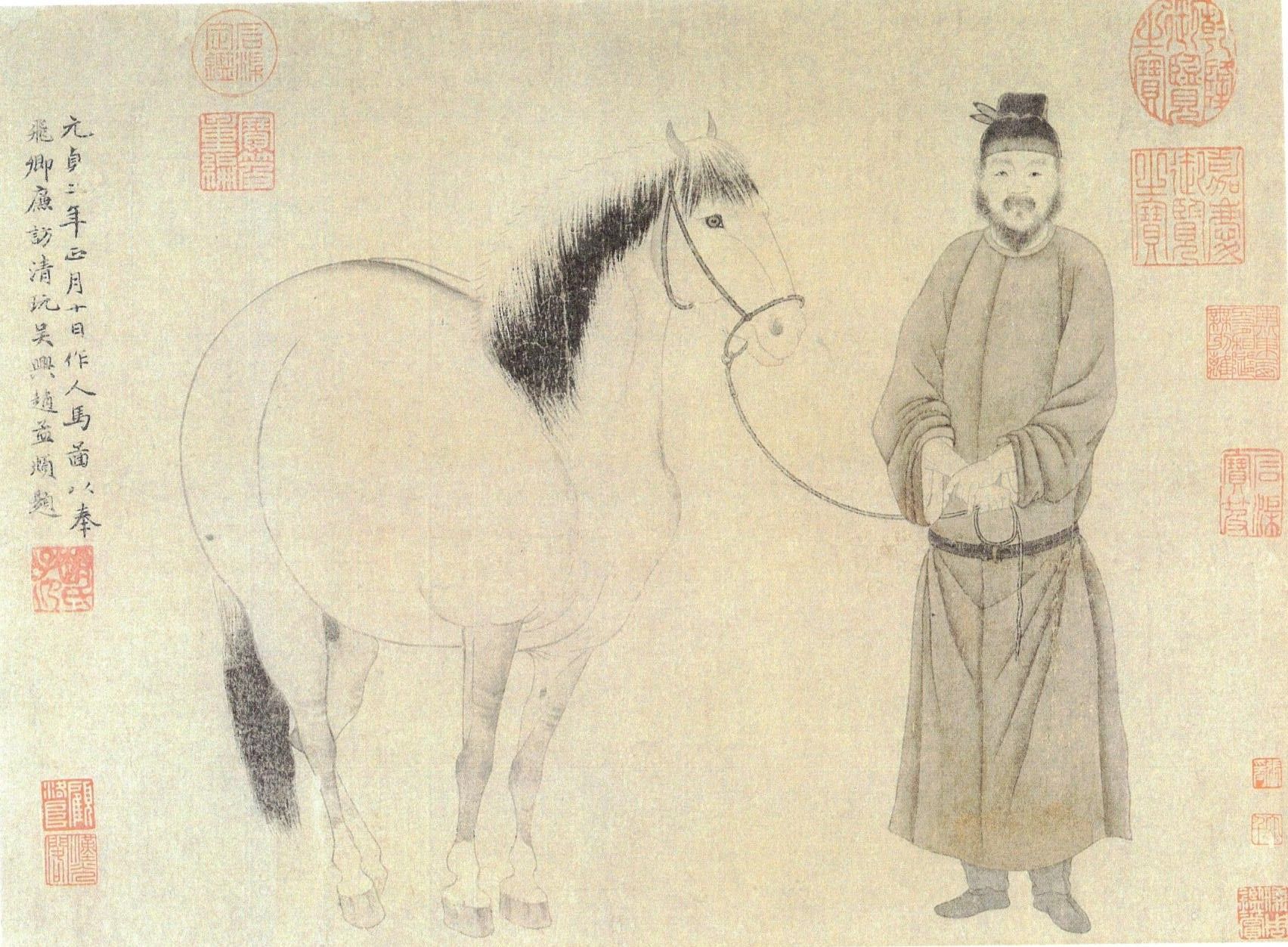
Zhao Mengfu (趙孟頫)(1254 – 1322) Groom and Horse (人馬圖), dated 1296, handscroll, ink and watercolour on paper. 30.3 x 43.5 cm), The Metropolitan Museum of Art
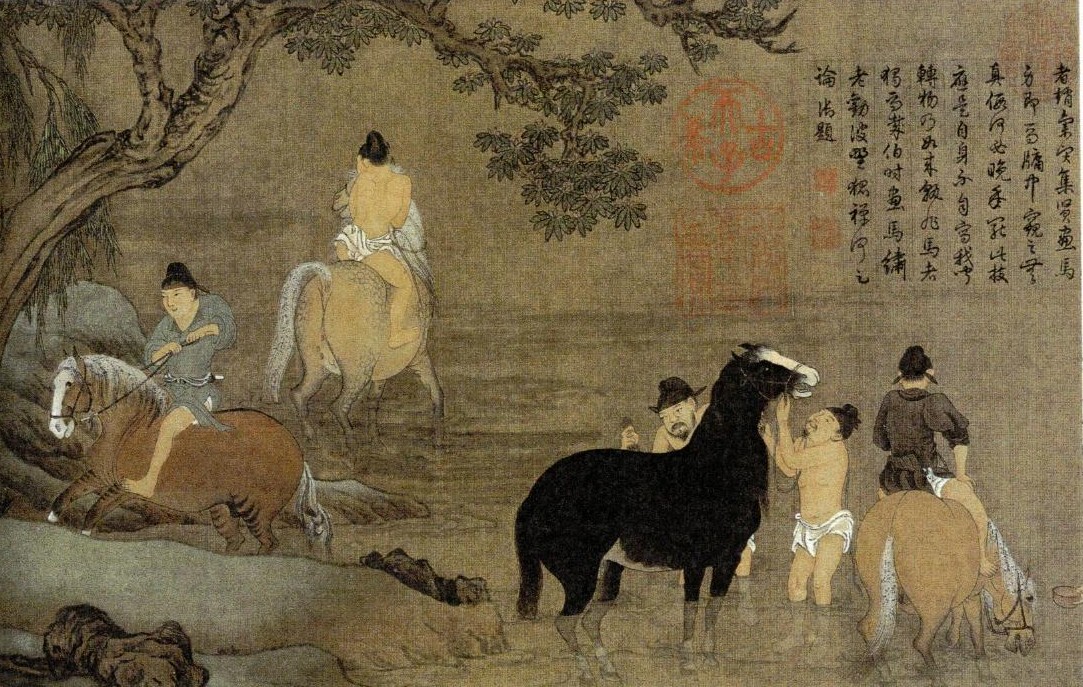
Zhao Mengfu (趙孟頫)(1254 – 1322) Horse bathing (浴馬圖) , handscroll, ink and watercolour on silk, 28.5 x 154 cm), only a portion is shown, Palace Museum (故宮博物院)Same as above, only a portion is shown.
Zhao Bosu (趙伯驌)(1124 -1182), Return of the Hunting Cavalry (番騎猎歸圖), ink and watercolour on silk, 22.1 x 24.9 cm.
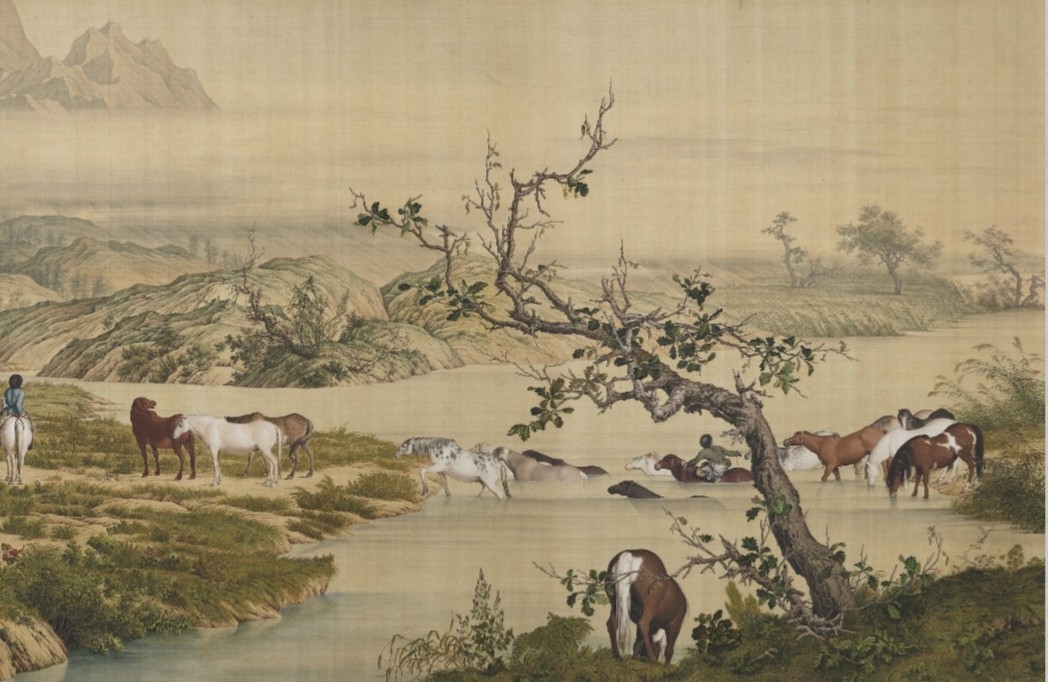
Castiglione (朗世寧)(1688-1766) One Hundred Horses (百駿圖), dated 1728, ink and watercolour on silk, 94.5 × 776 cm, only a portion is shown, National Palace Museum (國立故宫博物院)Same as above, only a portion is shown.Same as above, only a portion is shown.Same as above, only a portion is shown.Same as above, only a portion is shown.
Wan Zhirong (孟之榮) Groom and Horse (駿馬圖), dated 1916, ink and watercolour on paper, 29.5 x 60cm
Ge Xianglan (戈湘嵐)(1904 – 1964) Eight horses (八駿圖), dated 1940, ink and watercolour on paper, 51 x 130 cm
Xu Beihong (徐悲鴻)(1895-1953), Six horses (六駿圖) (dated 1942), horizontal scroll, ink and watercolour on paper. 95 x 181 cm
Ma Nai Liang (馬廼良) Galloping horses 逸驥尋雲步步高, dated 2004, ink on paper, around 136 x 222 cm (Mr Ma only used pure ink in this masterpiece. He diluted the ink to many different shades of grey. This monochromatic palette naturally focuses the viewer’s attention on texture, form, and composition rather than the distraction of colours. Mr Ma is a famous and well-respected artist, calligrapher and fine art teacher and educator in Sydney. He came from Hong Kong and he has been living in Australia for 34 years.)
馬到成功 (隸書 clerical script), inscriptions: 乙巳冬月 蕭燿漢, ink on pink tiger-skin xuan paper 粉紅色虎皮宣紙, long red seal: 延年increase longevity, square white seal: 蕭燿漢, 10 x 20 cm
The Horse is associated with success and good fortune. The phrase “馬到成功” in Chinese encapsulates the hope and expectation that success will follow swiftly and effortlessly, much like the arrival of a well-prepared cavalry.
Acknowledgements
I like to express my sincere gratitude to Mr Ma Nai Liang 馬廼良老師 for providing me with the image of his work and permitting me to include in my webpage. I also thank Mr Ma for his advice and guidance throughout the years.
I like to thank Professor P. Lam most sincerely for his consistent advice and guidance for the past 12 years on the 12 zodiac animals. I started on the Year of Goat in 2015 and this Year of Horse (2026) completed the full cycle.
Bibliography
中国剪纸 Paper Cut in China 十二生肖 The twelve symbol animals 漢坤東方出品
Bjaaland Welch, Patricia (2008) Chinese Art- A guide to Motifs and Visual Imagery Tuttle Publishing ISBN: 978-08048-3864-1
宋剑飞,吴宏敏 (2014) 历代名画录. 鞍马骏骑,江西美术出版社. ISBN 978-7-5480-2433-0












 Patrick Siu Chinese Calligraphy & Landscape Painting 蕭燿漢談書畫