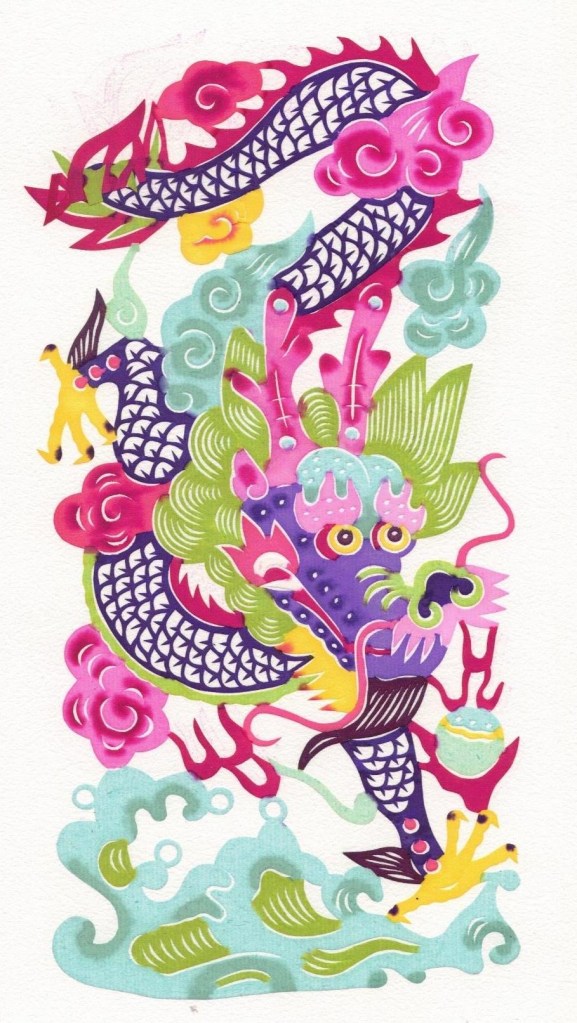
The Year of the Dragon (龍年)

The Dragon is the fifth of the 12-year cycle of animals which appear in the Chinese zodiac. The Year of the Dragon (龍) starts on February 10, 2024 .

The Chinese dragon (龍) is a legendary creature in Chinese folklore and mythology. It is a complex creature containing a combination of features of various animals such as the head of a camel, the horns of a deer, the eyes of a rabbit, the ears of a cow, the neck and the long body of a snake, the scales of a carp, the claws of a hawk, the palms of a tiger. They traditionally symbolize potent and auspicious powers.  They are believed to have the ability to bring rain and control bodies of water.

Historically, the Chinese dragon was associated with the Emperor of China and used as a symbol to represent imperial power. Statues and images of dragons can be found nearly everywhere in the Beijing Forbidden City (紫禁城).

Nine-Dragon Wall (九龍壁) in Beijing Forbidden City

Massive marble paving stones with carved dragons leading to the Palace of the Hall of Preserving Harmony (保和殿)

The Dragon Throne of the Emperor of China in the Palace of Heavenly Purity (乾清宮).

Ornaments with dragon designs

Jade dragon pendant, Han Dynasty (漢), 02 BCE-220 CE


Jade dragon ornament, Northern and Southern dynasty (南北朝),420-589 CE
Blue-and-white dragon vase

Paintings of the dragons

Xu Beihong (徐悲鴻) (1895-1953), Dragon, ink and watercolour on paper

Dragon Dance

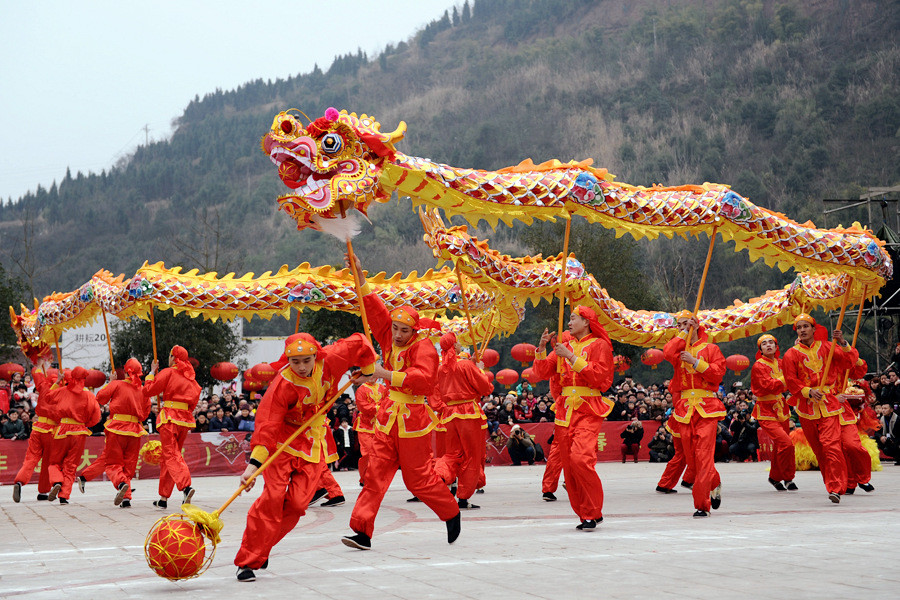
Dragon dance (舞龍) is often performed during the Chinese New Year. The dance is performed by a team of experienced dancers who manipulate a long flexible giant puppet of a dragon using poles positioned at regular intervals along the length of the dragon. It is believed dragon dance can bring good luck to people.
Please click the following link for more information :

Animal – The Year of the Dragon (龍年) – Patrick Siu Chinese Calligraphy & Landscape Painting 蕭燿漢談書畫

I wish my readers a blessed and delightful Year of the Dragon,

Patrick
The Lantern Festival (元宵節)

Children playing with colourful lanterns
Children playing with colorful lanterns

The 15th day of the first lunar month is celebrated as the Lantern Festival (元宵節). In 2024, it falls on 24 February (Saturday). As early as the Western Han Dynasty around 210 CE, the Lantern Festival had become a significant festival. During the Lantern Festival, people have fun at night carrying paper lanterns and solve riddles on the lanterns (猜燈謎).

In the ancient days, young adults celebrated in the hope of finding loved ones. Matchmakers were busily pairing couples. In more recent times, it is touted as the Chinese Valentine’s Day.

Lanterns are used for decorations and they are always red in colour to symbolize good fortune.  They can also be made in the shape of animals.

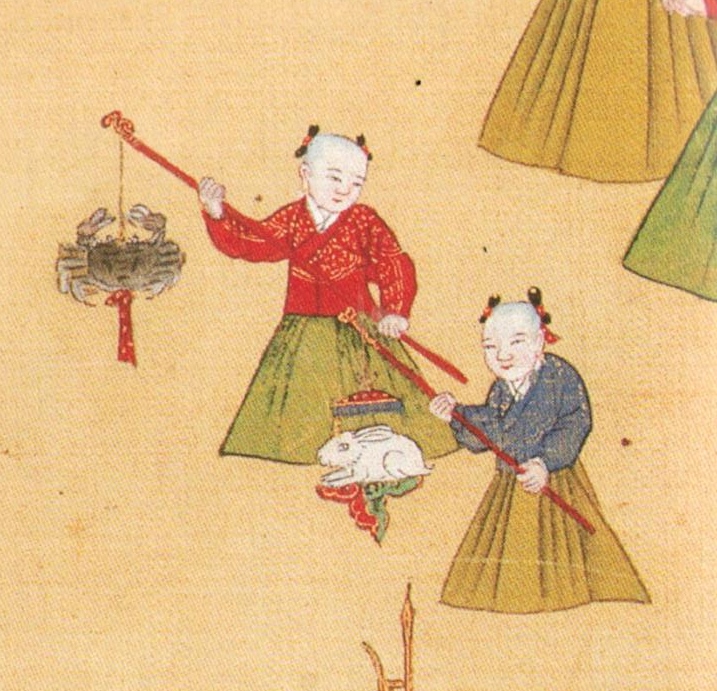
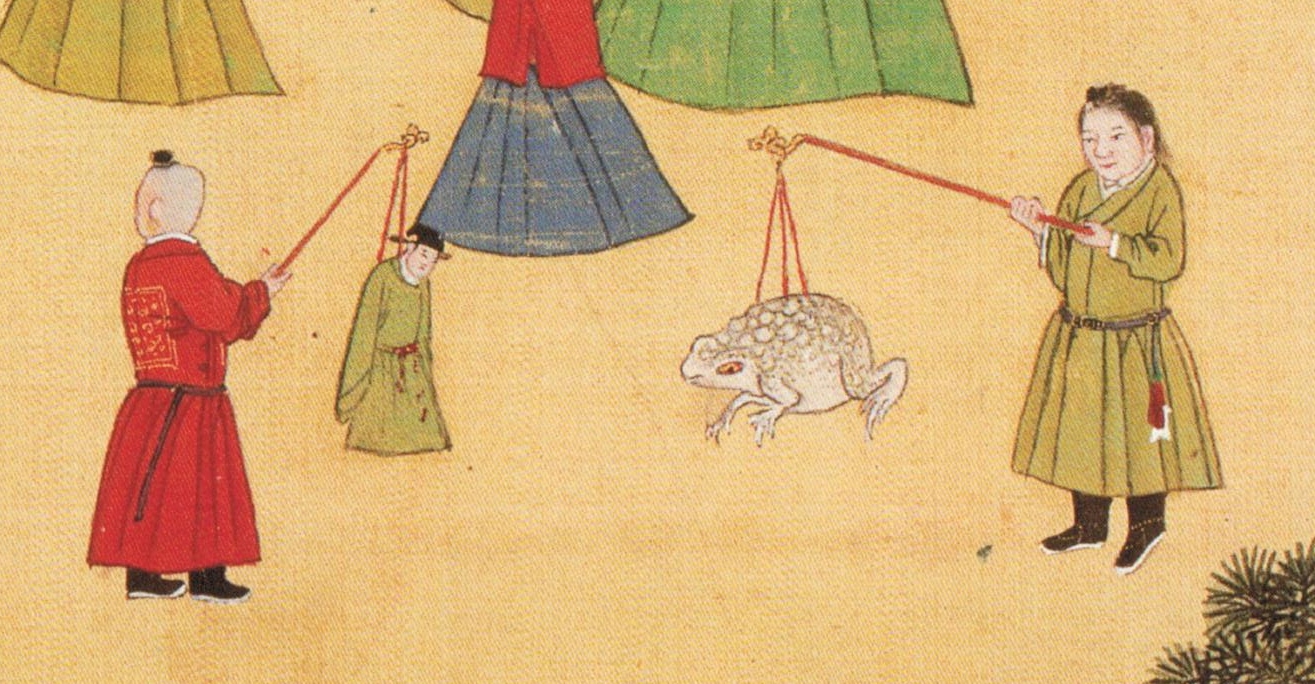
The following images show traditional lanterns in different shapes and designs in a long scroll painting circa 1486 CE (明宪宗元宵行樂圖卷).

elephant lantern
elephant lantern

crab lantern, rabbit lantern

toad lantern, figure lantern
figure lantern and toad lantern

a traditional lantern
traditional lantern

People eat sweet glutinous rice balls, yuanxiao (元宵) also known as tāngyuán (湯圓), and enjoy a family reunion.

Famous Chinese poems related to the Lantern Festival

朱淑真(一說作者為歐陽修)《生查子》

去年元夜時,花市燈如晝。月上柳梢頭,人約黃昏後。

今年元夜時,月與燈依舊。不見去年人,淚濕春衫袖。

辛棄疾青玉案之元夕》

東風夜放花千樹,更吹落、星如雨。寶馬雕車香滿路,鳳簫聲動,玉壺光轉,一夜魚龍舞。

蛾兒雪柳黃金縷,笑語盈盈暗香去。眾裡尋他千百度,驀然回首,那人卻在,燈火闌珊處。

唐寅《元宵》

有燈無月不娛人,有月無燈不算春。春到人間人似玉,燈燒月下月如銀。

滿街珠翠遊村女,沸地笙歌賽社神。不展芳尊開口笑,如何消得此良辰。

Acknowledgements :

The lanterns images come from 中國國家博物館  館藏文物研究叢書  繪畫卷  風俗畫 (2006)

Further readings:

http://en.wikipedia.org/wiki/Lantern_Festival

http://zh.wikipedia.org/wiki/%E5%85%83%E5%AE%B5%E8%8A%82 (元宵節)

http://baike.baidu.com/view/24718.htm (朱淑真)

http://zh.wikipedia.org/wiki/%E8%BE%9B%E6%A3%84%E7%96%BE (辛棄疾)

http://zh.wikipedia.org/wiki/%E5%94%90%E5%AF%85 (唐寅)

Renri – Everyone’s birthday (人日)

The 7th day of the Chinese New Year is known as Renri (人日, 人慶節 or 七元節), literally the Everyone’s birthday. In 2025, Renri falls on 4th February (Tuesday). According to Chinese folklore, Nǚ wā (女媧) is the goddess who created the world. She created the animals, human beings and grains on different days. Renri was the day human beings were created. The days on which different animals and grains were created are:

1st Day : chicken ;  2nd Day : dog ;  3rd Day : pig ;  4th Day ;  sheep ;  5th Day : cow ;  6th Day : horse ;  7th Day : human being ;  8th Day : grains (穀)

People celebrate renri as part of the CNY. Fireworks (花炮) are lit. Foods like “seven-vegetable congee” (七菜粥 ), “jidi congee” (及第粥) or “seven-colour sliced raw fish” (七彩魚生) are common to celebrate the occasion.

jidi congee (及第粥)
jidi congee (及第粥)

4410095859_a5eacb409e_b
seven-colour sliced raw fish (七彩魚生)

A poem related to renri.

人日思歸  薛道衡 (540 CE – 609)(南北朝人)

入春才七日, 離家已二年。人歸落雁後, 思發在花前。

(意譯) 入春只有七天, 我離家已經有兩年。回家的日子要等待春回大地雁群從南方北飛回來之後,但春天花開之前我已經回家的念頭了。

(Meaning in English) It is only the 7th day of the CNY but I have already left home for two years. I will return home after spring arrives when the wild geese flying back to the north.  I thought of going home well before the spring flowers blossom.

Further readings :

http://en.wikipedia.org/wiki/Renri

http://zh.wikipedia.org/wiki/%E4%BA%BA%E6%97%A5 (人日)

http://zh.wikipedia.org/wiki/%E8%96%9B%E9%81%93%E8%A1%A1 (薛道衡)

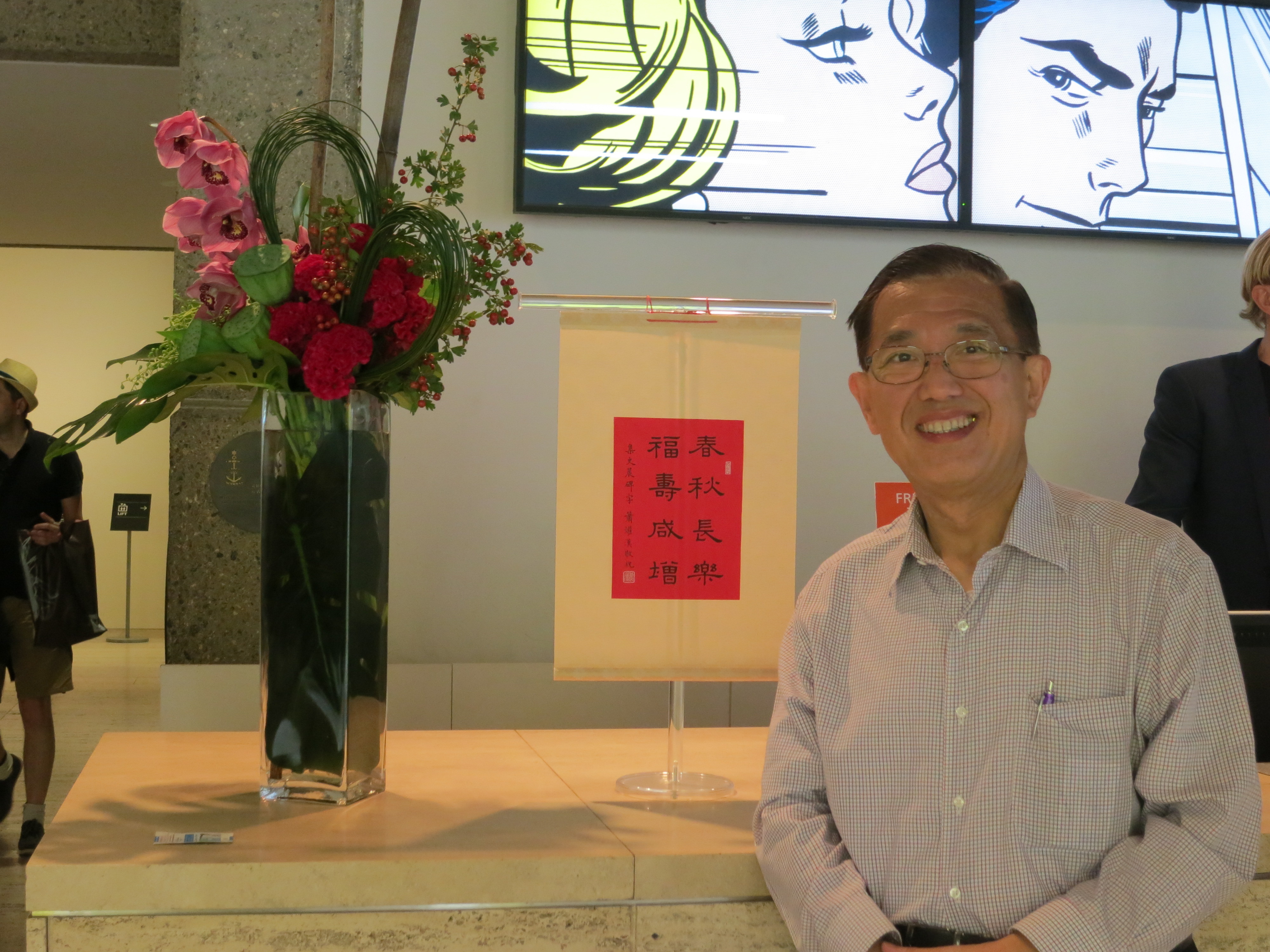
Couplet displayed in the foyer of Art Gallery NSW

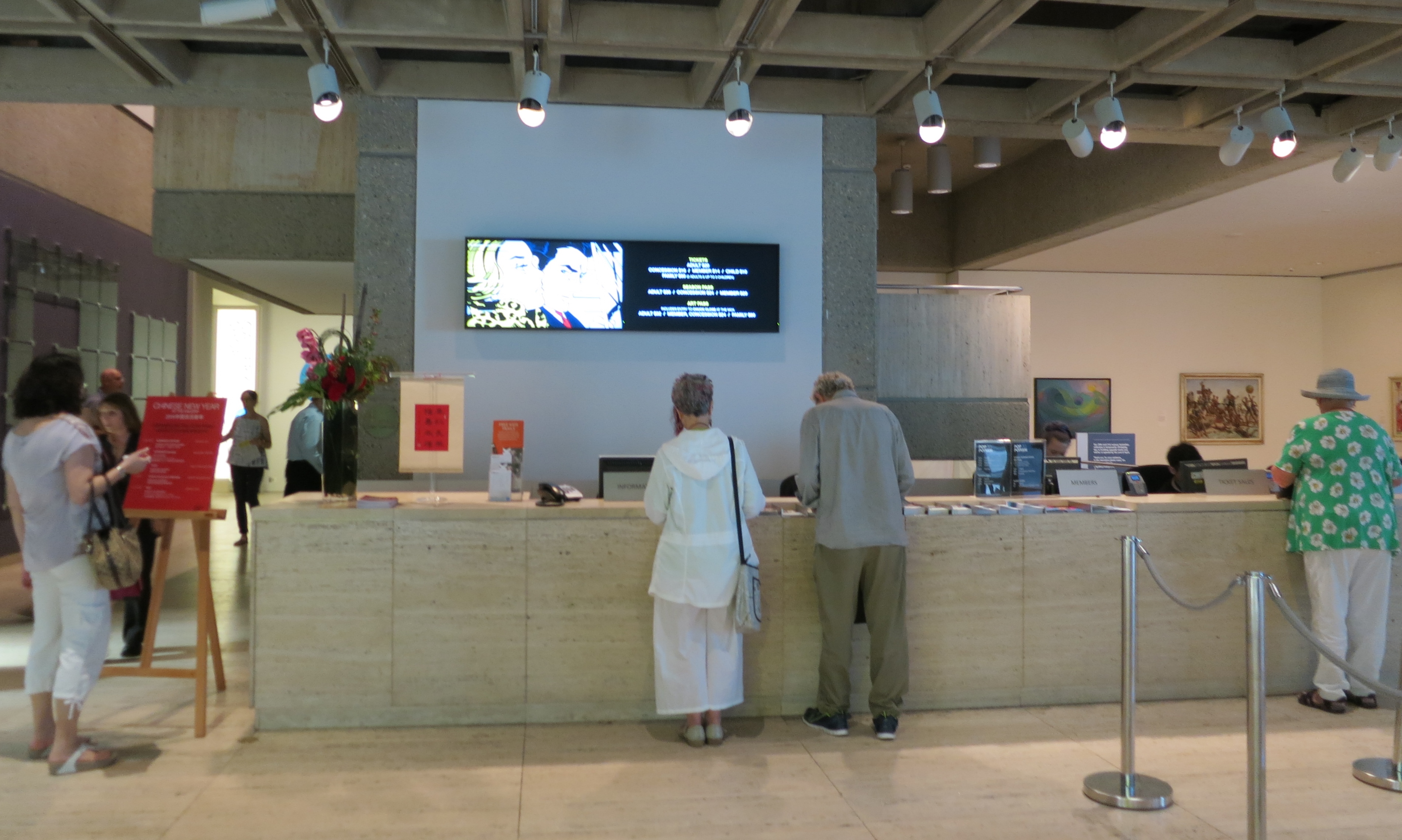
Foyer of Art Gallery NSW during 2015 CNY


Patrick and the couplet
Patrick and his couplet


春秋長樂, 福壽咸增。(隸書) 印章 : 延年 (朱文長方印),  蕭燿漢 (白紋方印)
春秋長樂, 福壽咸增。(隸書)
印章 : 延年 (朱文長方印), 蕭燿漢 (白紋方印)


Forever joy throughout spring and autumn

Perpetual increments of blessing and longevity