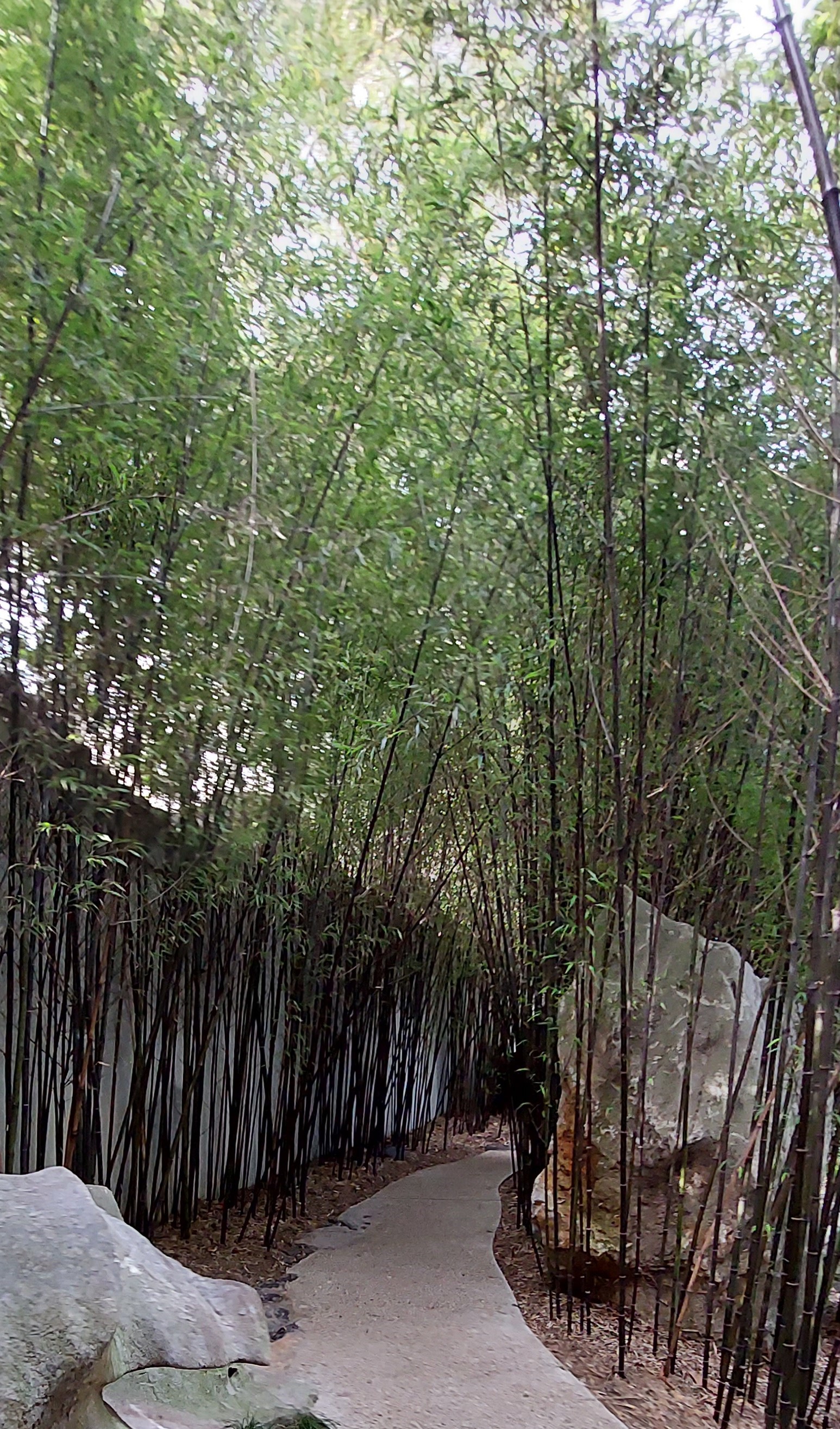
In Chinese traditional culture, bamboo (zhu 竹) symbolizes many virtues of a scholar including honesty, humility and loyalty. It bends in a storm but does not break, symbolizing integrity and endurance.

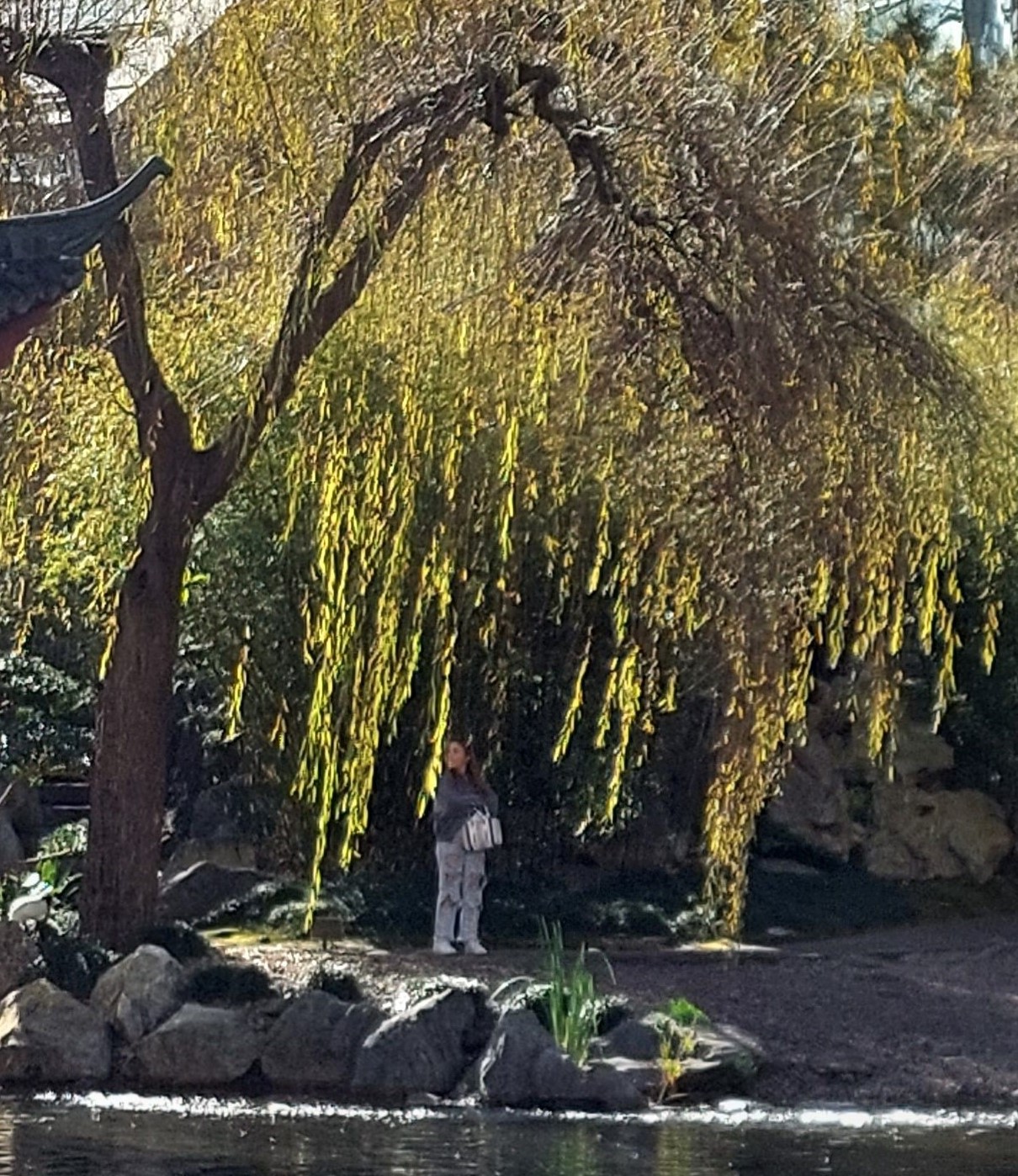
In Chinese culture, the willow (柳) has a number of symbolic meanings: It is associated with spring and rebirth. Its pliability suggests humility and flexibility. It is also associated with friendship, because of its intertwining branches, and also with parting from friends. Breaking willow branches and giving them to one and other is a way to farewell friends (離別時折柳相贈). In other culture, however, the weeping willow is a symbol of grief and mourning.

Good information about bamboo and willow painting can be found in Manual of the Mustard Seed Garden (芥子園畫傳).


Manual of the Mustard Seed Garden (芥子園畫傳 Jieziyuan Huazhuan) is a printed manual of Chinese painting compiled during the early-Qing Dynasty. The work was commissioned by Shen Xinyou (沈心友), whose mansion in Lanxi, Zhejiang province 浙江蘭溪 was known as Jieziyuan (芥子園), or Mustard Seed Garden. Shen possessed the teaching materials of Li Liufang (李流芳), a painter of the late-Ming Dynasty and commissioned Wáng Gài (王概), Wáng Shī (王蓍), Wáng Niè (王臬), and Zhū Shēng (諸升) to edit and expand those materials with the aim of producing a manual for landscape painting. The result was the first part of Jieziyuan Huazhuan, published in 1679, in five colours.
Bamboo and Willow tree Paintings by Mr IP Chit Hoo 松盦竹柳樹法


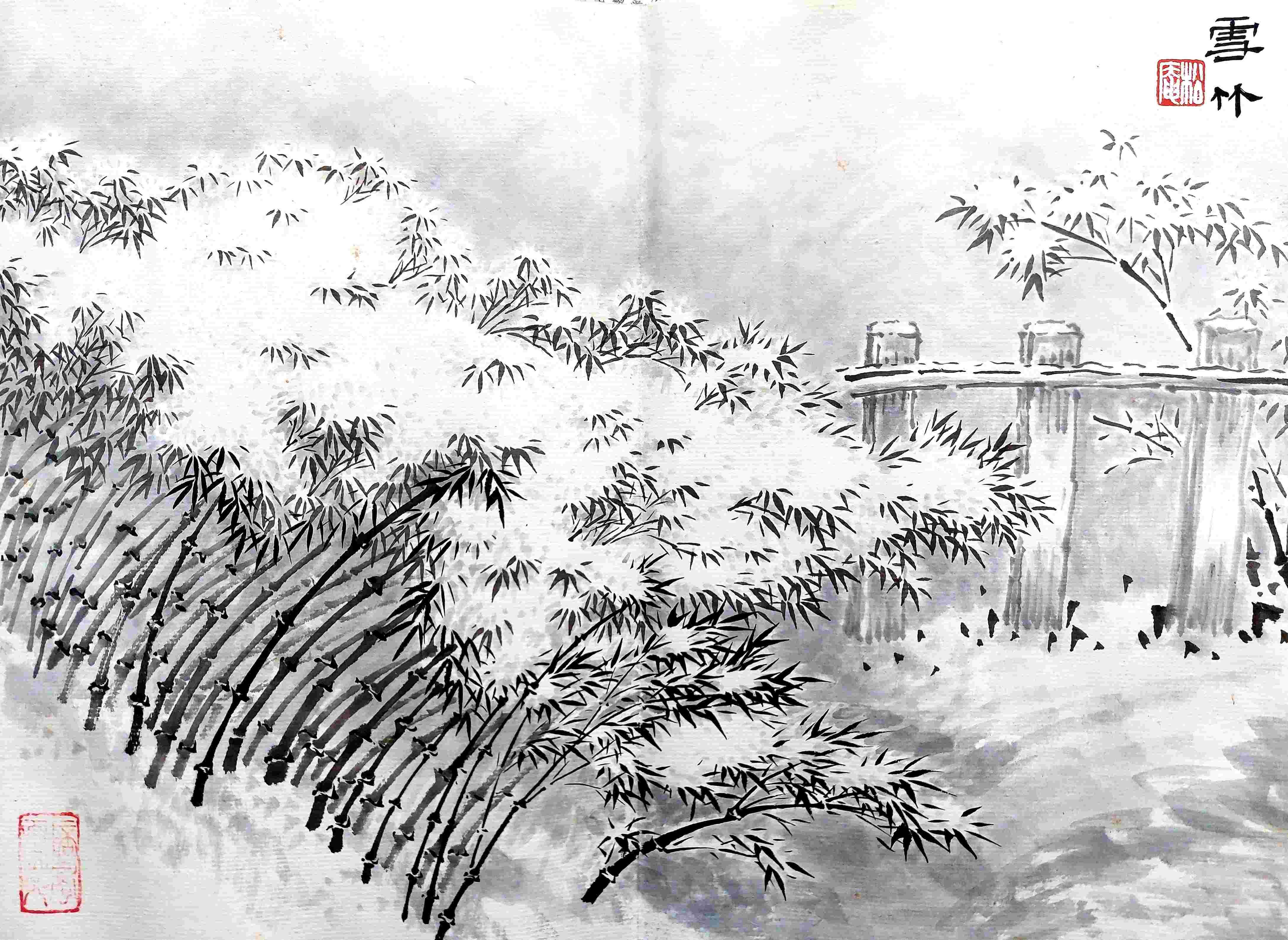


朱文長方印: 培風画苑; 白文方印: 松庵, ink on paper, 24 cm x 33 cm

For more information about bamboo paintings, please click the following webpage.
https://patricksiu.org/bamboo-painting
Acknowledgments
I would like to thank the late Mr Ip for his teaching. His dedication to Chinese painting and his generosity are always remembered. I would also like to thank Maria, Mr Ip’s daughter for her consistent support and encouragement.
Bibliography
https://en.wikipedia.org/wiki/Bamboo
https://en.wikipedia.org/wiki/Willow
https://en.wikipedia.org/wiki/Salix_babylonica
張光賓 (1981) 中國書畫 3 花竹畫 光復書局
Li Yun-Ho (1974) Painting and Calligraphy of Li Yen-Shan, Oriental Culture Publishers, H.K.
Mai-mai Sze (1978) The Mustard Seed Garden Manual of Painting, Princeton University Press
(明) 胡正言 (2014) 十竹齋書畫譜 上海書畫出版社 ISBN 978-7-5479-0838-9
 Patrick Siu Chinese Calligraphy & Landscape Painting 蕭燿漢談書畫